

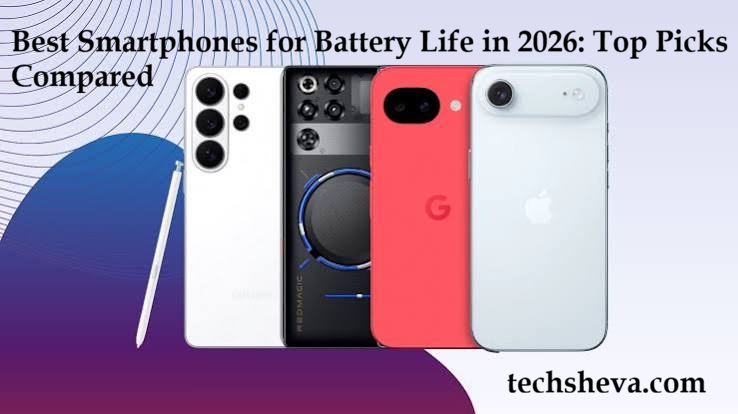
If you’re searching for the best smartphones for battery life in 2026, you’re probably not chasing a spec sheet number — you’re trying to avoid hunting for an outlet by 4 p.m. That distinction matters, because battery capacity alone tells you surprisingly little about how long a phone will actually last in your hands. A 7,000+ mAh battery paired with an inefficient chip and an aggressive high-refresh display can lose to a smaller battery running on a well-optimized processor and a smarter software stack.
This guide is built around what independent testers — including GSMArena, Tom’s Guide, PhoneArena, and Notebookcheck — have actually measured, not manufacturer marketing claims. Wherever a number below comes from a lab test rather than an official rating, we’ve noted it, because the gap between the two can be significant.
Quick Comparison: Top Battery Life Picks for 2026
| Smartphone | Battery | Charging | Display | Best For |
|---|---|---|---|---|
| OnePlus 15 | 7,300 mAh | 120W wired / 50W wireless | 6.78″ AMOLED, 165Hz | Best overall battery life |
| OnePlus 15R | 7,400 mAh | 100W wired | AMOLED, 144Hz | Best value flagship endurance |
| Asus ROG Phone 9 Pro | 5,800 mAh | 65W wired / 15W wireless | 6.78″ AMOLED, 185Hz | Best for gaming |
| Samsung Galaxy S25 Ultra | 5,000 mAh | 45W wired / 15W wireless | 6.9″ Dynamic AMOLED 2X, 120Hz | Best flagship efficiency (non-China brand) |
| iPhone 17 Pro Max | ~5,088 mAh | ~36W wired / 25W MagSafe | 6.9″ OLED, 120Hz | Best iOS battery + long-term health |
| Moto G Power (2026) | 5,200 mAh | 30W wired / 15W wireless | 6.8″ LCD, 120Hz | Best budget pick |
Only phones with independently verified testing or official manufacturer specifications are included here. Figures for unreleased or rumor-stage devices are excluded.
Why “Best Battery Life” Doesn’t Mean “Biggest Battery”
Before getting into individual picks, it’s worth understanding what actually drives endurance, because this is where a lot of comparison articles mislead readers. Real-world battery life comes from the interaction of several systems working together, not from capacity in isolation:
- Processor efficiency — a chip built on a smaller manufacturing node draws less power per unit of performance. This is a major reason Samsung’s Galaxy S25 Ultra, with a comparatively modest 5,000 mAh cell, can still post competitive screen-on times against phones with much larger batteries.
- Display technology and refresh rate — LTPO panels that dynamically scale from 1Hz to 120Hz+ save meaningful power versus fixed high-refresh panels, especially during static content like reading or menus.
- Software optimization — how aggressively an OS manages background processes, network radios, and app wake-locks affects daily drain as much as hardware does.
- Network and modem efficiency — 5G, particularly in weak-signal areas, is one of the single biggest drains on any phone’s battery, regardless of capacity.
The clearest illustration of this is Samsung’s Galaxy S series: the company has kept its Ultra model at a 5,000 mAh battery across seven consecutive generations (S20 Ultra through S26 Ultra) while still improving real-world endurance each year — almost entirely through chip and software efficiency gains rather than added capacity.
Read More: Google System Update 2026: What’s New for Android Users
Best Overall: OnePlus 15
The OnePlus 15 currently tops independent endurance charts, with Tom’s Guide recording roughly 25 hours in its standardized battery test — the longest result of any recently tested phone. That performance comes from a 7,300 mAh silicon-carbon battery (OnePlus lists this as two 3,650 mAh cells in series), paired with a Snapdragon 8 Elite Gen 5 chipset built for efficiency as much as raw power.
Charging is equally strong: 120W wired charging can take the phone from empty to full in well under 30 minutes, and it also supports 50W wireless charging — a feature still missing on most flagship rivals. The tradeoff is a large, heavy chassis, which is the price of fitting in that much battery capacity without moving to a smaller display.
Best for: anyone who wants the longest runtime available today and doesn’t mind a large-format phone.
Best Value Flagship Endurance: OnePlus 15R
The OnePlus 15R trims some flagship extras to hit a lower price point, but its battery story is nearly as strong. Independent testing put it at roughly 22 hours in Tom’s Guide’s benchmark, second only to its more expensive sibling, while costing meaningfully less. If the standard OnePlus 15’s price is the sticking point rather than its battery performance, the 15R is the more sensible buy for most people.
Best for: buyers who want near-flagship battery life without flagship pricing.
Best for Gaming: Asus ROG Phone 9 Pro
Gaming is one of the most demanding sustained workloads a phone can run — full brightness, maximum refresh rate, and a processor pinned at high clock speeds for extended periods. The Asus ROG Phone 9 Pro is purpose-built around that scenario, with a 5,800 mAh battery, active cooling accessories, and GSMArena lab results showing over 12 hours of continuous gaming and an overall Active Use Score around 16.5 hours.
Its 185Hz display (available in supported games) and 65W wired charging — capable of roughly 49% in 15 minutes — mean it recovers charge quickly between sessions, which matters more for gaming phones than outright capacity, since players are more likely to top up between matches than run a phone to zero.
Best for: mobile gamers who need sustained performance without thermal throttling or a mid-session battery scare.
Best Flagship Efficiency (Non-China Brand): Samsung Galaxy S25 Ultra
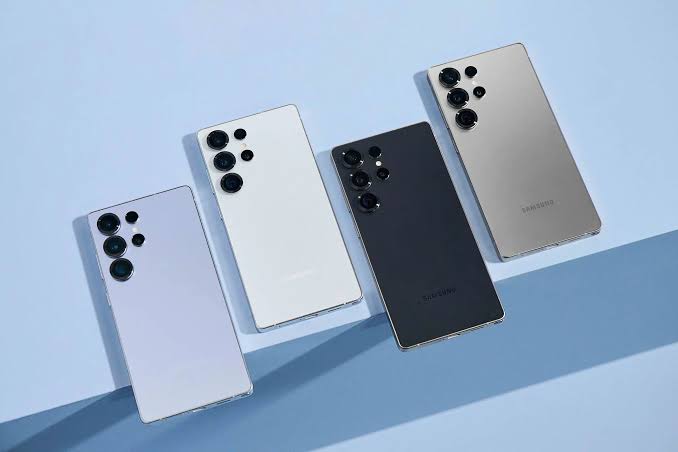
The Galaxy S25 Ultra is the clearest real-world example of processor and software efficiency outweighing raw capacity. Despite a 5,000 mAh battery that’s smaller than most 2026 flagship rivals, GSMArena’s lab testing showed solid gains over the previous generation in gaming and video playback, and Samsung officially rates it for up to 31 hours of video playback under controlled conditions.
Where it lags is charging speed: 45W wired charging is slow by 2026 standards, taking around an hour for a full charge in independent testing, versus roughly 20–30 minutes for phones with 100W+ charging. If you value all-day battery life but rarely need a rapid top-up, this tradeoff won’t bother you. If fast recharging matters as much as endurance, it’s a real limitation.
Best for: buyers who want dependable all-day battery life in a mainstream flagship ecosystem and don’t need ultra-fast charging.
Best iOS Battery Life: iPhone 17 Pro Max
Apple doesn’t publish battery capacity, but teardown estimates put the iPhone 17 Pro Max around 5,088 mAh. Apple’s official rating claims up to 39 hours of video playback, the highest of any iPhone released to date, though that figure comes from a controlled local-video loop rather than mixed daily use. GSMArena’s independent lab testing found a more real-world Active Use Score near 18 hours, with roughly 25.5 hours of pure video playback and about 12 hours of continuous gaming.
Charging remains a relative weak point for the iPhone lineup: the Pro Max peaks around 36W wired, reaching about 50% in 20 minutes with a compatible 40W+ adapter — competitive with Samsung, but well behind the 100W-plus charging now common on Android flagships. Where the iPhone tends to pull ahead is long-term battery health, thanks to Apple’s charge-limiting software features and multi-year battery health tracking.
Best for: iOS users who want the longest-lasting iPhone available and value battery longevity over charging speed.
Best Budget Pick: Moto G Power (2026)
At $299.99, the Moto G Power (2026) packs a 5,200 mAh battery — a modest 4% bump over its predecessor — paired with the efficient, if unexciting, MediaTek Dimensity 6300 chipset. GSMArena’s endurance testing scored it around 13 hours and 20 minutes, described as roughly average rather than exceptional, and PhoneArena’s real-world testing found it functioned reliably as a one-day phone rather than a multi-day standout.
It supports 30W wired and 15W wireless charging — modest numbers, but reasonable for the price. The bigger limitation for long-term buyers is software support: Motorola commits to just two years of OS updates and three years of security patches, notably shorter than Samsung’s budget A-series commitment.
Best for: buyers who want dependable one-day battery life on a tight budget and don’t need multi-year software support.
Battery Capacity vs. Real Endurance: A Direct Comparison
The clearest way to see that capacity and endurance aren’t the same thing is to compare two phones with nearly identical battery sizes:
- Moto G Power (2026): 5,200 mAh → ~13h 20m independent endurance score
- Samsung Galaxy S25 Ultra: 5,000 mAh → 17h 14m in Tom’s Guide testing
Both phones have essentially the same battery capacity, yet the Galaxy S25 Ultra lasts roughly 30% longer in standardized testing. The difference comes down to a more efficient flagship chipset, a more power-conscious display panel, and tighter software optimization — exactly the factors a battery capacity number alone can’t capture.
Charging Speed vs. Charging Convenience
A longer-lasting battery reduces how often you need to charge; a faster-charging one reduces how long you’re tied to an outlet when you do. These are related but separate priorities, and 2026’s phones split clearly along these lines:
- Fastest wired charging: OnePlus 15 (120W) and OnePlus 15R (100W) lead comfortably, both capable of a near-full charge in well under 30 minutes.
- Fastest recovery for short sessions: The Asus ROG Phone 9 Pro’s 65W charging reaches roughly 49% in 15 minutes — useful for gamers who top up between matches rather than charge overnight.
- Slowest of the group: Samsung’s Galaxy S25 Ultra (45W) and Apple’s iPhone 17 Pro Max (~36W) both take closer to an hour for a full charge, though both offset this with strong overall endurance.
It’s worth noting that higher advertised wattage doesn’t always translate to a proportionally faster real-world charge — charging curves taper significantly above 50–80% on most phones, so the practical benefit of very high wattage is concentrated in the first 15–20 minutes.
Battery Life by User Type
Heavy everyday users
If your day is dominated by social media, messaging, streaming, and browsing rather than gaming, prioritize a phone with strong Active Use Score results across mixed testing — the OnePlus 15, OnePlus 15R, and Galaxy S25 Ultra all perform well here, each for different reasons (raw capacity for OnePlus, efficiency for Samsung).
Gamers
Sustained performance under thermal load matters more than headline battery capacity. The Asus ROG Phone 9 Pro’s combination of a large battery, active cooling, and fast top-up charging makes it the strongest pick for extended gaming sessions specifically, even though its capacity trails the OnePlus 15.
Travelers
Long stretches away from a charger call for a mix of high capacity and fast wired charging, since power banks and outlets aren’t always reliable on the road. The OnePlus 15 and 15R are strong picks here, both for total runtime and for how quickly they can top up during a layover or short stop.
Budget buyers
Reasonable, dependable one-day battery life at a lower price point is realistic — the Moto G Power (2026) delivers that — but expectations should be calibrated: budget phones generally trail flagships in both raw endurance and charging speed, and this segment’s software update support is often shorter as well.
Battery Health and Long-Term Considerations
A phone’s battery life on day one isn’t the same as its battery life two years in. Lithium-ion batteries lose capacity gradually through repeated charge cycles, and several factors accelerate that process:
- Frequent high-wattage charging generates more heat, which is one of the primary accelerants of battery degradation over time.
- Extreme temperatures, particularly heat, degrade battery chemistry faster than normal use.
- Habitually charging to 100% or draining to 0% puts more stress on a battery than staying within a moderate charge range.
Apple’s iPhones include built-in battery health tracking and optional charge-limiting features aimed at slowing this degradation, and the company offers official battery replacement service when capacity does decline. Motorola states the Moto G Power (2026) is designed to retain over 80% of its original capacity after 1,000 charge cycles. Not every manufacturer publishes this kind of longevity data, so if long-term battery health matters to your decision, check whether the brand you’re considering discloses cycle-life expectations before buying.
Battery-Saving Features Worth Knowing About
Most 2026 flagships include software tools that can meaningfully extend battery life without a hardware change:
- Adaptive/dynamic refresh rate — LTPO displays that drop to 1Hz for static content and scale up only when needed, standard on the OnePlus 15, Galaxy S25 Ultra, and ROG Phone 9 Pro.
- Battery saver / low-power modes — available across Android and iOS, typically capping background activity and, in some cases, refresh rate.
- Adaptive battery management — background learning of app usage patterns to restrict power to rarely used apps.
- Charge limiting — available on iPhones and increasingly on Android flagships, capping charge at 80–85% to reduce long-term wear when full capacity isn’t needed daily.
What to Look For When Buying
- Choose based on raw capacity if you’re a heavy user who needs maximum runtime and don’t mind a larger, heavier phone — the OnePlus 15 fits this profile.
- Choose based on efficiency if you want strong daily battery life without carrying a phone built around a giant cell — the Galaxy S25 Ultra and iPhone 17 Pro Max both do more with less capacity.
- Choose fast charging if your day is unpredictable and you’re more likely to need a quick 15-minute top-up than an overnight full charge — OnePlus’s 100W+ options or the ROG Phone 9 Pro’s 65W charging serve this better than Samsung or Apple’s current offerings.
- Choose a gaming-focused phone only if sustained gaming performance under load is a regular part of your use — the extra cooling hardware and capacity aren’t necessary if gaming is occasional.
- Choose a budget pick if one-day reliability at a lower price matters more than charging speed or multi-year software support.
Important Limitations
Every figure in this guide reflects controlled or standardized testing conditions. Real-world battery life will vary based on screen brightness, signal strength, 5G versus Wi-Fi usage, ambient temperature, the specific mix of apps you run, and your individual settings. Treat these numbers as reliable points of comparison between phones tested under the same conditions, not as guarantees of what you’ll personally get on a single charge.
FAQs
Which smartphone has the best battery life in 2026? Based on independent testing, the OnePlus 15 currently posts the longest runtime of any recently tested phone, with roughly 25 hours in Tom’s Guide’s standardized battery benchmark.
Is a bigger battery always better for battery life? No. Processor efficiency, display technology, and software optimization all affect real-world endurance as much as raw capacity. The Galaxy S25 Ultra’s 5,000 mAh battery, for example, performs competitively against much larger cells thanks to chip and software efficiency.
Which phone is best for gaming battery life? The Asus ROG Phone 9 Pro is built specifically for sustained gaming loads, with over 12 hours of continuous gaming recorded in independent lab testing and fast top-up charging for between-match recovery.
Which phone charges the fastest? The OnePlus 15 leads with 120W wired charging, capable of a near-full charge in well under 30 minutes, followed closely by the OnePlus 15R at 100W.
Does a high refresh-rate display reduce battery life? It can, but modern LTPO panels that dynamically scale refresh rate based on content (as low as 1Hz for static screens) largely offset this, which is why high-refresh flagships like the OnePlus 15 still post strong endurance numbers.
Does 5G drain smartphone batteries faster? Yes — 5G, especially in areas with weak signal, is one of the more significant drains on battery life regardless of phone model, since the modem works harder to maintain a connection.
Final Recommendation
If you want the single longest battery life available today, the OnePlus 15 is the clear pick based on independent testing. If you’d rather not carry a large-format phone or prefer tighter software polish over raw capacity, the Samsung Galaxy S25 Ultra and iPhone 17 Pro Max both deliver strong, efficient all-day battery life within their respective ecosystems. Gamers should look specifically at the Asus ROG Phone 9 Pro, and budget buyers can get dependable one-day battery life from the Moto G Power (2026) without paying flagship prices.

2 Comments
Pingback: Passkeys vs Passwords: Which Is More Secure?
Pingback: Best Smartwatches 2026: Features, Battery and Value Compared