

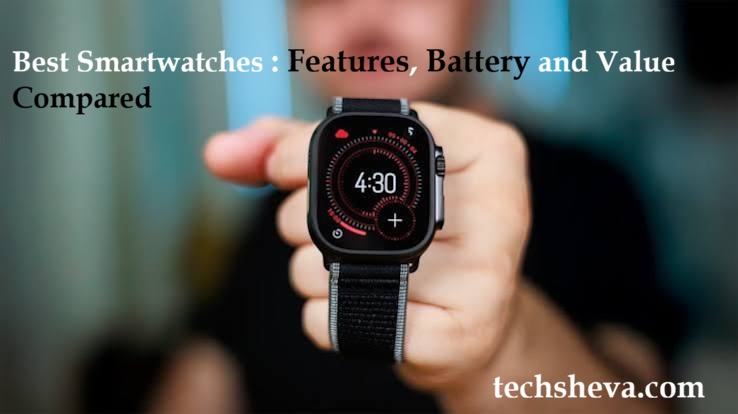
Buying Best Smartwatches in 2026 isn’t really about finding “the best” one — it’s about matching a specific set of trade-offs (battery life, phone compatibility, fitness depth, price) to how you actually live. This guide walks through the current market, compares the models that matter, and tells you which one fits which kind of buyer.
A quick note before diving in: Apple is widely expected to announce the Apple Watch Series 12 and Ultra 4 in September 2026, and Samsung’s Galaxy Watch 9 has recently launched. Where a next-generation model is imminent or brand new, that’s flagged below so you know whether to buy now or wait.
How to Choose: The Decisions That Actually Matter
Before comparing specific models, it helps to know which questions decide the purchase:
- iPhone or Android? This is the single biggest filter. Apple Watches only work fully with iPhones; Wear OS watches (Samsung, Google, most others) need Android for full functionality.
- How much battery life do you need? A smartwatch you charge nightly (Apple, Samsung, Pixel) behaves very differently from one you charge weekly (Garmin, Amazfit).
- Do you need serious fitness/outdoor tracking, or casual step-counting? Multi-day athletes want Garmin-level depth; most people don’t.
- What’s your budget, and does it need to include a subscription? Some of the most useful health features (Fitbit Premium, Google Health, Garmin Connect+) sit behind paywalls.
Best Smartwatch Overall: Apple Watch Series 11 (iPhone) / Samsung Galaxy Watch 8 (Android)
There’s no single “best” watch because the platforms don’t compete directly — but each has a clear category leader.
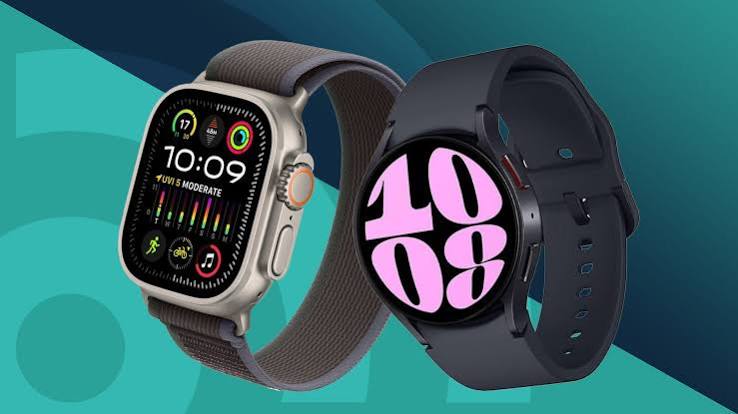
For iPhone owners, the Apple Watch Series 11 starts at $399 and is currently Apple’s best all-rounder, sitting between the budget SE 3 and the rugged, pricier Ultra 3. It added hypertension pattern detection, 5G connectivity, and improved scratch resistance in its most recent update, and battery life rose to 24 hours per charge, with fast charging that delivers about 8 hours of use from a 15-minute top-up.
For Android owners, the Galaxy Watch 8 lineup is the most complete Wear OS option, running Samsung’s Exynos W1000 chip alongside Wear OS 6 and One UI 8, with AI-driven health features across all three models (Watch 8, Watch 8 Classic, Watch Ultra). Samsung’s Galaxy Watch 9 has since arrived for buyers who want the newest hardware, but the Watch 8 series remains widely available and, at discounted prices, a strong value pick.
Read More: Best Laptops for Students 2026: Performance Meets Value
Best Battery Life: Garmin (Venu 4 / Fenix 8) — and Why “Battery Life” Means Different Things
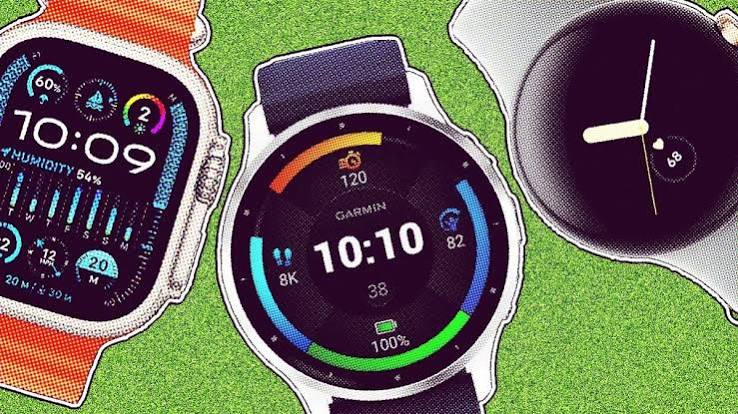
If long battery life is your top priority, no mainstream smartwatch touches Garmin. The Garmin Venu 4 is rated for roughly 12 days in smartwatch mode, and real-world testing found about nine days with a few workouts a week, always-on display off, and regular notifications. Turn the always-on display on, though, and that drops sharply — to roughly 3–4 days, which is a useful reminder that no battery figure means much without knowing the settings behind it.
The rugged Fenix 8 goes further still with solar charging on select models, and reviewers rate it as one of the best premium multisport smartwatches of the year thanks to its beautiful AMOLED display, exceptional battery life, and rugged construction.
By contrast, the mainstream smartphone-tethered watches are all in the same rough band:
- Apple Watch Series 11: 24 hours per charge (38 hours in low-power mode)
- Apple Watch Ultra 3: up to 42 hours of normal use, up to 72 hours in Low Power Mode
- Samsung Galaxy Watch Ultra: up to 100 hours in power-saving mode, though normal all-day use is far shorter
- Google Pixel Watch 4 (45mm): Google claims 40 hours, and in testing the watch actually exceeded that, lasting just over 48 hours with the always-on display enabled; GPS use brought that down to about 36 hours
The takeaway: if you want to genuinely go a week or more without thinking about a charger, you need a Garmin or a similar dedicated fitness watch. If overnight charging is a habit you don’t mind, any of the smartphone-companion watches will comfortably get you through a day, including sleep tracking.
Best for iPhone: Apple Watch Series 11, Ultra 3, or SE 3
Apple’s current lineup, launched in September 2025, breaks down cleanly by use case:
- Apple Watch SE 3 ($249): the value pick. It gained an always-on display and 2x faster charging this generation, but it skips ECG, the Blood Oxygen app, hypertension notifications, blood-pressure measurement, satellite communications, a depth gauge, and a water-temperature sensor to hit its price point.
- Apple Watch Series 11 ($399): the mainstream choice, adding ECG and hypertension notifications over the SE.
- Apple Watch Ultra 3 ($799): built for outdoor and endurance use, with the longest battery life, stronger water resistance, dual-frequency GPS, and satellite communications.
Apple’s next generation — the Series 12 and Ultra 4 — is expected in September 2026, reportedly with a new chip, upgraded health sensors, and possibly a microLED display for the Series 12, but according to Bloomberg’s Mark Gurman, no major exterior redesign is expected for either model this year. If your current watch is working fine, there’s little urgency to wait — but if you’re buying in the next few weeks, it’s worth knowing a refresh is imminent.
Best for Android: Google Pixel Watch 4 or Samsung Galaxy Watch 8/9
For Android and especially Pixel-phone owners, the Google Pixel Watch 4 stands out for its display and software polish: a domed Actua 360 display reaching 3,000 nits, a 10% larger screen area, and 16% smaller bezels than its predecessor, plus dual-frequency GPS, Fitbit-derived health tracking, and satellite SOS on LTE models. The caveat: it’s not the best choice for people who want several days or weeks of battery life, or serious endurance athletes who need Garmin-style training depth, and it is designed exclusively for Android devices — it won’t work with an iPhone at all.
The Samsung Galaxy Watch 8 series is the deeper alternative for Samsung phone owners, with tighter Galaxy ecosystem integration (Samsung Health, Samsung Pay, message replies) and a rotating-bezel Classic variant for people who prefer physical controls over touch gestures.
Best for Fitness and Sports: Garmin
For anyone training seriously — running, triathlon, hiking, or multi-sport — Garmin remains the category leader. The Venu 4 is Garmin’s most smartwatch-like model, but reviewers are clear that its basic breadcrumb-style navigation is one of the clearest signs it isn’t built for serious backcountry use; there are no full-color topographic maps. If you actually need offline mapping and turn-by-turn guidance, the Fenix 8 or Forerunner 970 are the better picks, while the Forerunner 570 is positioned as the more training-focused alternative to the Venu.
Budget-conscious athletes should also look at the Amazfit T-Rex 3 and Coros Apex 4, which reviewers describe as durable, accurate alternatives to Garmin’s pricier Fenix and Enduro lines.
Best Value and Best Budget Options
You don’t need to spend $400+ to get a genuinely capable smartwatch in 2026. Under the $200 mark:
- Amazfit Active 2 (~$129): widely cited as the best all-around value under $200, with a sapphire-glass AMOLED display, roughly 10-day battery life, and free offline maps.
- Fitbit Versa 4 (~$125): the pick for sleep and simple fitness tracking, offering a friendly sleep and activity layer, a roughly 6-day battery claim, and built-in GPS.
- Fitbit Charge 6 (~$149): more of a fitness band than a smartwatch, but reviewers rate it as using the most broadly validated sleep-staging algorithm in its price category.
- Samsung Galaxy Watch FE: a stripped-down Wear OS option for Galaxy owners who want calls, notifications, and Samsung Pay without the full Watch 8 price.
The trade-off across all of these is consistent: you get a bright AMOLED screen, GPS, and multi-day battery, but you give up full app-store access, LTE independence, and — in most cases — the very top tier of health-sensor accuracy.
Comparison Table
| Model | Best for | Battery life (rated) | Phone compatibility | Starting price | Main limitation |
|---|---|---|---|---|---|
| Apple Watch SE 3 | Budget iPhone buyers | 18 hrs (32 hrs low-power) | iPhone only | $249 | No ECG, blood oxygen, or hypertension alerts |
| Apple Watch Series 11 | Most iPhone users | 24 hrs (38 hrs low-power) | iPhone only | $399 | Charges nightly like all mainstream watches |
| Apple Watch Ultra 3 | Outdoor/endurance iPhone users | 42 hrs (72 hrs low-power) | iPhone only | $799 | Large, heavy case; premium price |
| Samsung Galaxy Watch 8 | Most Android/Galaxy users | ~24–30 hrs typical | Android only (best with Galaxy) | ~$350 | Battery trails Garmin by a wide margin |
| Samsung Galaxy Watch Ultra | Rugged Android use | Up to 100 hrs (power saving) | Android only | ~$650 | Bulky; niche outdoor focus |
| Google Pixel Watch 4 | Pixel/Android software fans | 30–40 hrs (up to 48 hrs low-power) | Android only | $349–$400 | Not built for outdoor/backcountry use |
| Garmin Venu 4 | Fitness-focused daily wear | ~9–12 days (3–4 with AOD on) | iOS and Android | $549.99 | No full offline maps; premium price |
| Garmin Fenix 8 | Serious athletes/outdoors | Multi-day, extended with solar | iOS and Android | ~$800+ | Large, expensive; overkill for casual users |
| Amazfit Active 2 | Best budget value | ~10 days | iOS and Android | ~$129 | Fewer premium materials, thinner app support |
| Fitbit Versa 4 | Sleep/simple fitness tracking | ~6 days | iOS and Android | ~$125 | Limited smartwatch depth vs. Apple/Samsung |
Battery figures reflect manufacturer ratings and, where noted, independent testing; always-on displays, GPS use, and cellular connectivity all shorten real-world runtime.
Battery Life, Explained
Battery numbers on spec sheets are almost never comparable across brands, because they depend heavily on settings:
- Always-on displays are the single biggest battery drain on smartphone-style watches — Garmin’s own testing shows the Venu 4 dropping from 9–12 days to 3–4 days once AOD is enabled.
- GPS tracking, especially continuous or dual-frequency GPS during workouts, drains a battery far faster than passive step-counting. The Pixel Watch 4, for example, averaged around 36 hours with GPS tracking versus just over 48 hours without it.
- Cellular/LTE connections add meaningful drain whenever the watch is untethered from your phone.
- Health sensors running continuously (24/7 heart rate, blood oxygen, skin temperature) also add up over a day.
If you sleep with your watch on for sleep tracking, a watch that needs nightly charging is a poor fit — you’ll want something in Garmin’s or Amazfit’s multi-day range instead.
Value, Explained
The most expensive smartwatch is not automatically the best value. A useful way to think about value in 2026:
- Software longevity matters as much as hardware. Apple and Samsung both offer years of guaranteed software updates; some budget Android watches do not.
- Subscriptions can be hidden costs. Fitbit’s deeper coaching features sit behind Fitbit/Google Health Premium, and Garmin’s most advanced training insights are increasingly gated behind Garmin Connect+. Factor that into the real cost of ownership.
- Ecosystem lock-in cuts both ways. An Apple Watch is genuinely the best watch for an iPhone owner and a poor one for an Android owner, regardless of specs — and vice versa for Wear OS devices.
- Ask what you’ll actually use. A Garmin Fenix 8’s dive-computer and multi-day mapping features are wasted on someone who just wants notifications and step counts; the Ultra 3’s satellite SOS is only useful if you’re genuinely going off-grid.
Important Limitations to Know Before You Buy
- Health features vary by region and regulatory approval. Apple’s hypertension notifications, for instance, depend on FDA clearance in the U.S. and equivalent approvals elsewhere — availability isn’t guaranteed everywhere at once.
- Smartwatch health data is not a medical device replacement. Heart-rate, ECG, and blood-oxygen features are wellness tools, not diagnostic tools, and shouldn’t replace professional medical care or advice.
- Cross-platform compatibility is limited. Apple Watches don’t work with Android at all, and Wear OS watches lose significant functionality (and sometimes won’t pair at all) with iPhones.
- “Up to” battery figures are best-case. Real-world battery life depends on your specific settings, and reviewers consistently find always-on display and GPS use cut manufacturer estimates substantially.
- A new generation may be days or weeks away. With Apple’s Series 12/Ultra 4 expected in September 2026 and Samsung’s Galaxy Watch 9 already out, check release timing before buying at full price.
FAQ
Which smartwatch is best in 2026? There’s no single winner — the Apple Watch Series 11 is the best all-rounder for iPhone owners, the Galaxy Watch 8 (or newer Watch 9) leads for Android/Samsung users, and Garmin’s Venu 4 or Fenix 8 win outright on battery life and fitness depth.
Which smartwatch has the longest battery life? Among mainstream models, Garmin’s Venu 4 and Fenix 8 lead by a wide margin, rated for roughly 9–12 days versus roughly one to two days for Apple, Samsung, and Google’s smartphone-companion watches.
Is the Apple Watch or Galaxy Watch better? Neither is objectively better — it depends entirely on whether you carry an iPhone or an Android phone, since each watch is built around its matching ecosystem.
Do I need a Garmin for fitness tracking, or is Apple/Samsung enough? For casual fitness tracking (steps, workouts, sleep, heart rate), Apple and Samsung are more than sufficient. Garmin becomes worthwhile if you want offline maps, advanced training-load metrics, or multi-day battery life for endurance sports.
Should I wait for the Apple Watch Series 12? If you’re an iPhone user and can wait a few weeks until the expected September 2026 announcement, it’s worth doing — especially since reports suggest the Series 12 and Ultra 4 will bring internal upgrades without a major price jump. If you need a watch now, the Series 11 remains a strong buy.
What’s the best smartwatch under $200? The Amazfit Active 2 is widely regarded as the strongest all-around value under $200, while the Fitbit Versa 4 is the better pick if sleep tracking is your main priority.
