


Phones and laptops are getting more expensive in 2026 for several connected reasons, but the biggest pressure is coming from the rising cost of memory and storage. The rapid expansion of AI data centers is increasing demand for memory chips, while manufacturers are directing more production toward higher-margin server and AI components. That leaves consumer electronics competing for tighter supplies.
The result is reaching shoppers through higher prices, fewer inexpensive options, and pressure on manufacturers to change specifications or absorb smaller margins. Gartner estimates that combined DRAM and SSD prices could rise 130% by the end of 2026, contributing to higher PC and smartphone prices.
Why Are Phones and Laptops More Expensive in 2026?
The simplest answer is component costs are rising, particularly for memory and storage.
However, the situation is more complicated than one chip becoming expensive. Several factors are affecting the final price of a phone or laptop:
- Growing AI data-center demand
- Higher DRAM and NAND prices
- Limited semiconductor manufacturing capacity
- Manufacturers shifting capacity toward AI and server products
- Higher production and supply-chain costs
- Tariff uncertainty in some markets
- Increasing demand for AI-enabled hardware
- Pressure on manufacturers’ profit margins
These factors can overlap, meaning a device that uses several expensive components may become considerably more costly to manufacture.
Read More: Latest Technology News 2026: Biggest Tech Updates This Month
1. AI Is Increasing Demand for Memory Chips
Artificial intelligence is one of the biggest reasons behind the current memory shortage.
AI data centers require enormous quantities of memory and storage. High-bandwidth memory, or HBM, is particularly important for advanced AI accelerators, while server DRAM and other memory technologies are also needed throughout data-center infrastructure.
Memory manufacturers such as Samsung, SK hynix, and Micron have strong incentives to supply this growing market.
That creates a problem for consumer electronics.
The same broad semiconductor manufacturing ecosystem also supplies memory used in laptops, smartphones, gaming devices, and other products. As AI infrastructure absorbs more capacity, consumer-device manufacturers face tighter supply and higher prices.
How AI Demand Affects a Laptop
Consider a simplified supply chain:
AI data centers → higher memory demand → tighter memory supply → higher component prices → higher laptop manufacturing costs → higher retail prices
The same basic pressure can affect smartphones.
2. RAM Prices Are Putting Pressure on Laptop Costs
RAM is an important part of laptop manufacturing, and its cost has become a major concern for PC manufacturers.
TrendForce reported that conventional DRAM contract prices were expected to rise 13–18% quarter over quarter in Q3 2026, while NAND Flash contract prices were expected to increase 10–15%. It also noted that higher component costs were expected to flow into notebook prices.
This matters because manufacturers cannot always absorb a large increase in component costs.
A company has three basic choices:
- Absorb the additional cost.
- Reduce specifications or other costs.
- Increase the product’s selling price.
When costs remain elevated, the third option becomes increasingly difficult to avoid.
3. SSD Storage Is Also Becoming More Expensive
Memory pressure is not limited to RAM.
Laptops and smartphones also depend heavily on NAND flash storage.
NAND is used in products such as:
- SSDs
- Smartphone storage
- Tablets
- USB storage
- Memory cards
- Data-center storage
TrendForce reported that NAND Flash contract prices were expected to continue rising in the third quarter of 2026, partly because AI inference and large-scale data-center deployments were supporting demand.
For consumers, this means upgrading from 256GB to 512GB or from 512GB to 1TB may become more expensive than it was previously.
4. Manufacturers Are Prioritizing Higher-Margin AI Hardware
One of the most important parts of the story is where semiconductor manufacturers choose to allocate production capacity.
AI hardware can command significantly higher prices than many consumer components.
As a result, memory manufacturers have been shifting capacity toward server applications and high-bandwidth memory used in AI infrastructure. TrendForce specifically noted that capacity reallocations toward server applications are reducing the supply available for PC DRAM.
This does not mean manufacturers have stopped making memory for phones and laptops.
Instead, consumer electronics are competing against an extremely strong enterprise and AI market.
5. Smartphones Are Being Affected Too
Smartphones need memory and storage just like laptops.
A modern phone may include:
- DRAM
- NAND storage
- Processor
- Display
- Camera sensors
- Modem
- Battery
- Wireless components
- Power-management hardware
When memory and storage costs increase, smartphone manufacturers have to decide how to protect their margins.
That can result in higher prices, changed configurations, or fewer low-cost models.
Gartner projected that smartphone shipments could decline 8.4% in 2026, while smartphone prices could rise as higher memory costs are passed through the supply chain.
Why Budget Phones Can Be Hit Hardest
Budget smartphones operate with tighter margins.
A premium phone manufacturer may have more room to absorb a component-cost increase. A company selling an inexpensive phone has less flexibility.
For example, if a low-cost phone has only a small manufacturing margin, even a relatively modest increase in memory, storage, display, or other components can make the original price difficult to maintain.
This is why affordable devices can be particularly vulnerable during a component shortage.
6. Laptops Are Facing the Same Problem
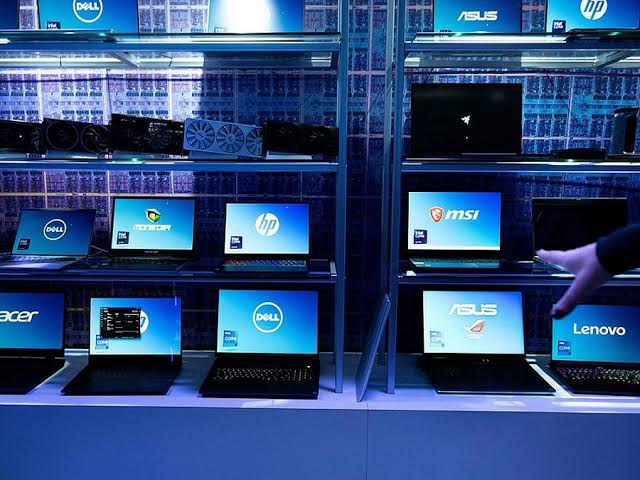
The laptop market is experiencing similar pressure.
A typical laptop contains:
- RAM
- SSD storage
- CPU
- Display
- Battery
- Motherboard
- Wireless hardware
- Cooling system
- Chassis
- Power components
Memory and storage are only two parts of the total cost, but they can have a meaningful effect on the final bill of materials.
Gartner estimated that PC prices could increase 17% in 2026 compared with 2025, largely because of surging memory costs.
HP’s August 2026 results also showed the pressure manufacturers are facing: the company reported that rising memory-chip and commodity costs were reducing PC margins, even as PC revenue increased.
7. AI Laptops Can Add Another Layer of Cost
There is another important factor: manufacturers are increasingly promoting AI PCs.
AI PCs include hardware designed to handle certain AI workloads more efficiently, such as dedicated neural-processing capabilities.
These systems can require additional or more advanced components.
However, it is important not to assume that every laptop price increase is caused by AI features themselves.
There is a difference between:
AI increasing component demand
and
a manufacturer charging more for an AI-enabled laptop.
Both can influence prices, but they are separate factors.
8. Tariffs Can Increase Prices in Some Markets
Tariffs are another potential source of price pressure, particularly in markets that rely heavily on imported components or finished electronics.
In August 2026, reports indicated that the U.S. administration was considering additional tariffs involving semiconductors and related technology products. The exact scope and implementation can change, so consumers should distinguish between proposed measures and tariffs that are actually in effect.
If tariffs apply to imported components or finished devices, manufacturers and retailers may face additional costs.
Those costs can potentially reach consumers through higher retail prices.
Why Tariffs Do Not Affect Every Country Equally
The impact depends on:
- Where a device is manufactured
- Where components are sourced
- Import rules
- Local taxes
- Currency exchange rates
- Distribution costs
- Whether the manufacturer absorbs the cost
Therefore, a price increase in one country does not automatically mean the same percentage increase elsewhere.
9. Supply Chains Are Still Extremely Important
A phone or laptop is not made from a single component.
It depends on a global network involving:
Raw materials → semiconductor fabrication → component manufacturing → device assembly → shipping → distribution → retail
A disruption or price increase at any stage can affect the final product.
The semiconductor industry is especially interconnected. A shortage in memory, for example, can affect manufacturers even if processors, displays, and other components remain available.
10. Why Companies Cannot Simply Keep Prices the Same
Consumers often ask:
Why don’t phone and laptop companies simply absorb the extra cost?
Sometimes they do.
But companies have to balance:
- Manufacturing expenses
- Employee costs
- Research and development
- Marketing
- Logistics
- Retail margins
- Currency movements
- Component costs
- Profitability
If several costs rise simultaneously, absorbing all of them can significantly reduce margins.
HP’s 2026 results demonstrate this pressure, with the company’s PC operating margin falling as higher memory and commodity costs offset some benefits from higher PC revenue.
What Is “Shrinkflation” in Technology?
Technology companies do not always raise the sticker price.
Sometimes they change what consumers receive for the same price.
This can happen through:
- Less RAM
- Less storage
- Different components
- Fewer accessories
- Lower-cost materials
- Reduced features
This is sometimes described as tech shrinkflation.
However, consumers should verify the specifications of individual products rather than assuming every manufacturer is reducing hardware.
Will Cheap Phones and Laptops Disappear?
The low-cost market is under particular pressure.
Gartner said rising memory costs could make entry-level PCs increasingly difficult to sustain and predicted that the sub-$500 PC segment could disappear by 2028.
That does not mean inexpensive laptops will suddenly disappear from every store.
Instead, it suggests that manufacturers may increasingly struggle to produce very low-cost systems with competitive specifications and acceptable margins.
For consumers, this could mean paying more for a device with specifications that previously belonged to a lower price category.
Are Premium Phones and Laptops Better Protected?
Not necessarily, but premium products can have more pricing flexibility.
A manufacturer selling a high-end device may have more room to adjust its price or absorb some component costs.
Budget products have less room because consumers are highly price-sensitive.
This can create an unusual situation where the cheapest devices experience the strongest pressure.
Will Technology Prices Come Down Again?
Possibly, but there is no reliable date for when prices will normalize.
Memory markets are cyclical. Manufacturers can increase production, demand can weaken, inventories can rebuild, and supply constraints can eventually ease.
TrendForce expected memory-price increases to moderate in Q3 2026 as consumer demand weakens, but it still described the DRAM market as extremely tight.
Gartner, meanwhile, expects memory costs to remain a major factor affecting PCs and smartphones throughout 2026.
So consumers should not assume that prices will immediately return to previous levels.
Should You Buy a Phone or Laptop Now?
There is no universal answer.
The right decision depends on whether you actually need a new device.
Buy now if:
- Your current device is failing.
- Your laptop is no longer capable of handling your work.
- You need a device for school or business.
- You have found a genuine discount.
- Your current device no longer receives important security updates.
Consider waiting if:
- Your current device works well.
- You only want an upgrade for a small performance improvement.
- You are not using demanding applications.
- You can comfortably postpone the purchase.
Waiting can potentially help if component prices stabilize, but future prices are difficult to predict.
How to Save Money on a Phone or Laptop in 2026
You can reduce the impact of higher technology prices without necessarily buying the cheapest device.
1. Compare total specifications
Do not compare devices based only on processor names.
Look at:
- RAM
- Storage
- Display
- Battery
- Processor
- Software support
- Repairability
- Warranty
2. Consider refurbished devices
A good refurbished phone or laptop can offer substantially more hardware for your budget.
Buy from a reputable seller and check the warranty and return policy.
3. Do Not Overbuy
If you only browse websites, use office software, attend online classes, and stream videos, you may not need a high-end AI laptop.
Likewise, a smartphone user who mainly uses messaging, social media, photography, and video may not need the most expensive flagship.
4. Consider Last-Generation Models
A previous-generation model can sometimes provide better value than the newest release.
Look for meaningful discounts rather than buying solely because a product is new.
5. Upgrade When Necessary, Not Automatically
If your current laptop has enough storage and memory and still performs well, keeping it longer may be financially sensible.
The same applies to smartphones.
What Does This Mean for Consumers?
The biggest change in 2026 is not simply that every phone and laptop has become more expensive.
The larger issue is that the economics of consumer electronics are changing.
AI infrastructure is competing for semiconductor capacity, memory prices are increasing, and manufacturers are under pressure to maintain profitability.
That can lead to:
- Higher average prices
- Fewer ultra-budget choices
- More expensive upgrades
- Greater interest in refurbished products
- Longer device replacement cycles
Gartner expects consumers and businesses to keep PCs for longer as higher prices discourage frequent upgrades.
Frequently Asked Questions
Why are phones getting more expensive in 2026?
The biggest factor is rising memory and storage costs, partly driven by demand from AI data centers. Other factors can include manufacturing, logistics, currency movements, and tariffs in particular markets.
Why are laptops more expensive in 2026?
Laptops are being affected by higher DRAM and SSD costs. Manufacturers are also facing broader component and production pressures, which can eventually reach consumers through higher retail prices.
Is AI responsible for higher phone and laptop prices?
AI is an important contributor, particularly because AI data centers require large quantities of memory and storage. However, AI is not the only reason device prices can increase.
Will RAM prices go down in 2026?
Prices can change as supply and demand conditions evolve. TrendForce expects increases to moderate in some memory categories during Q3 2026, but the market remains tight.
Are cheap smartphones disappearing?
Low-cost smartphones are under significant pressure because they operate with smaller margins. Higher component costs can make inexpensive devices harder to produce profitably.
Should I buy a laptop now or wait?
If your current laptop meets your needs, waiting can be reasonable. If you need a replacement for work, education, or reliability reasons, delaying a necessary purchase may not be worthwhile.
Will phone prices become cheaper again?
They could if memory supply improves and component costs fall, but there is no guaranteed timetable. Pricing will depend on semiconductor supply, demand, manufacturing costs, competition, and regional economic conditions.
Conclusion
Phones and laptops are getting more expensive in 2026 because several cost pressures are converging, with the global AI boom and resulting memory demand playing a particularly important role. Higher DRAM and NAND prices are affecting manufacturers, while supply constraints and other economic factors add further pressure.

3 Comments
Pingback: Passkeys vs Passwords: Which Is More Secure?
Pingback: How to Protect Yourself From Phishing Attacks in 2026
Pingback: Upcoming Games 2026: Biggest PC and Console Releases