

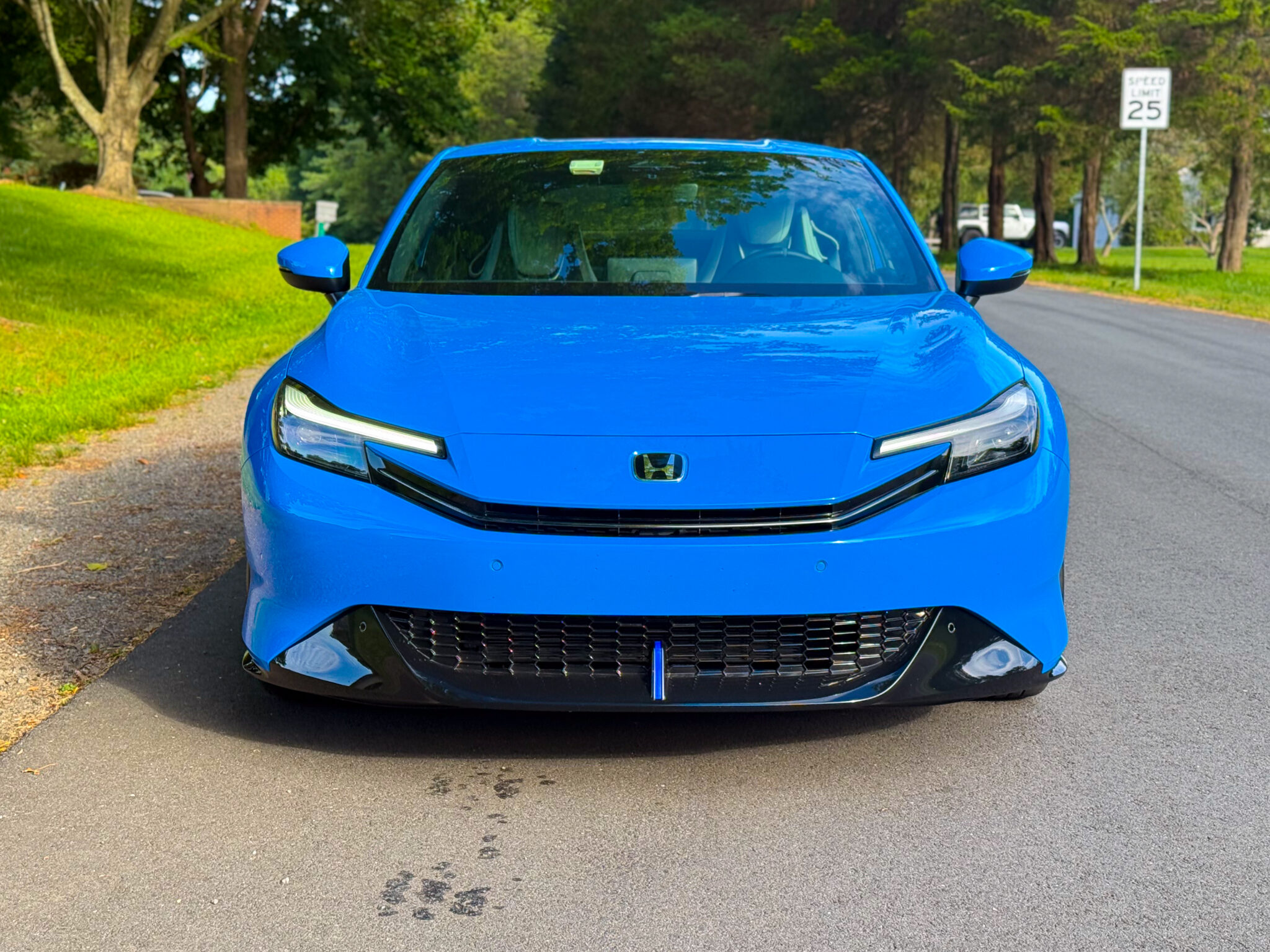
You could tell Honda wanted to set expectations before I even got behind the wheel. In an email ahead of my drive, the company made a point of emphasizing that “the Prelude is not a sports car.” That’s understandable. On paper, the sleek coupe—technically a three-door hatchback—doesn’t look especially impressive when placed next to some of its rivals.
Take the Mazda MX-5 or Subaru BRZ, for example. Both weigh hundreds of pounds less, while the BRZ also makes more power than the Prelude’s 200 hp (149 kW). Then there’s the Volkswagen Golf GTI, which weighs roughly the same as the Prelude at 3,261 pounds (1,479 kg), yet produces around 20 percent more power and has rear seats that adults can actually use.
But after spending a week with the bright-blue Prelude, those numbers became surprisingly easy to forget. The driving experience is far more compelling than the spec sheet suggests, and this could easily end up being one of the best cars I drive all year.
That shouldn’t come as a huge surprise when you look at the Prelude’s history. Across its previous five generations, Honda never really positioned the Prelude as a traditional sports car. Instead, it served as something of a technology showcase, introducing innovations such as fuel injection, four-wheel steering, variable valve timing, and active torque transfer.
For the sixth-generation Prelude, Honda’s standout technology is S+ Shift. The system gives the automaker’s four-cylinder hybrid powertrain a more engaging, sporty character, helping the new Prelude feel more special than its numbers might suggest.
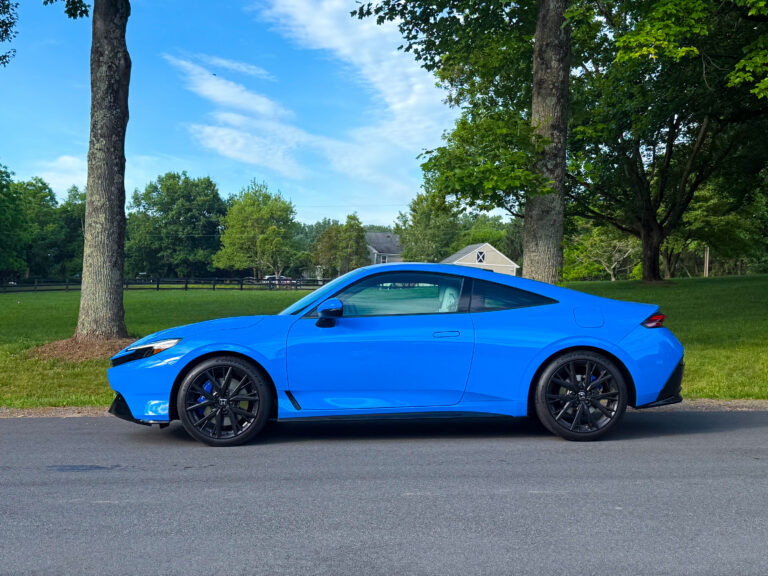
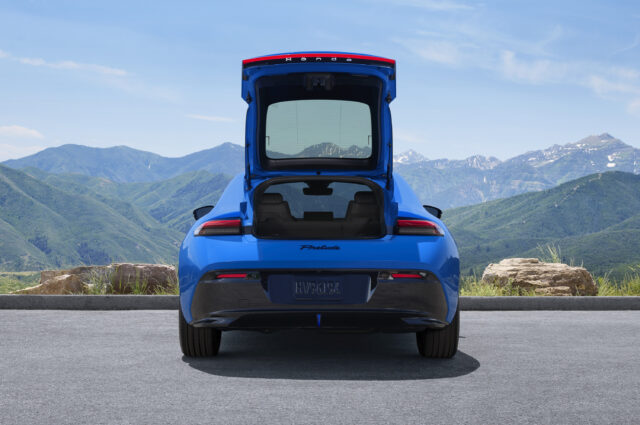
Technically, a three-door fastback not a two-door coupe.Jonathan Gitlin
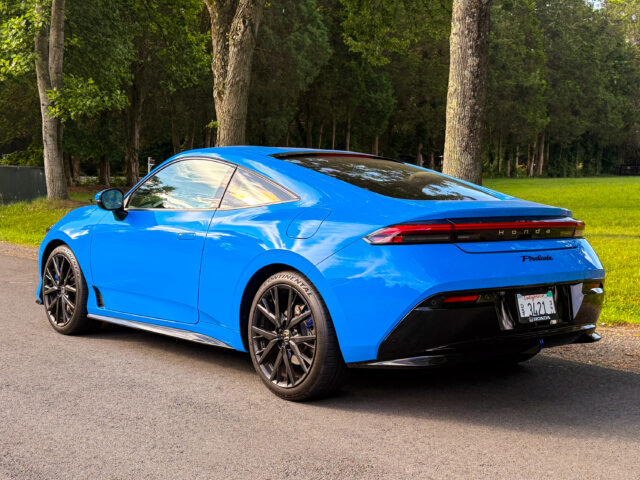
Left: Note the air vent behind the front wheel well.Jonathan Gitlin
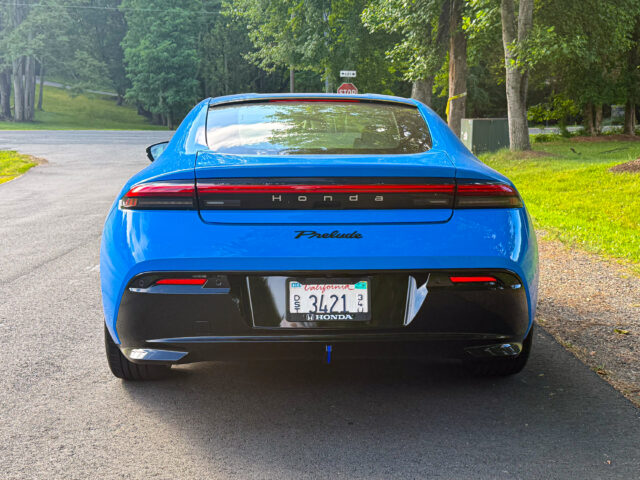
Right: There’s something quite Porsche-like about the rear.Jonathan Gitlin
Fuel Sipper
Most of the time, the Prelude’s front wheels are powered by a 181-hp (135 kW), 232 lb-ft (315 Nm) electric traction motor. That motor gets its energy either from the 1-kWh battery for short stretches of pure EV driving or from the 2.0-liter four-cylinder Atkinson-cycle engine. In the latter setup, a second electric motor-generator converts the engine’s output into electricity, which then powers the traction motor.
Like the Chevrolet Volt and several other hybrids, the Prelude can also send power directly from the gasoline engine to the front wheels at highway speeds, where that setup is more efficient.
And efficiency is clearly one of the Prelude’s biggest strengths. Honda rates it at a combined 44 mpg (5.3 L/100 km), giving you roughly 466 miles (750 km) of range on a full tank. That makes the Prelude surprisingly well suited to long-distance cruising—a proper grand tourer in that respect.
Leave the car in Comfort mode and ignore the steering-wheel paddles and the large S+ button on the center console, and the Prelude can feel like a slightly sportier, two-door Toyota Prius. At least from the front, anyway. I’m still amazed Honda’s designers managed to create a nose that looks so remarkably similar to Toyota’s without someone from the legal department getting involved.
Comfort mode keeps things relaxed. The ride is soft, the powertrain stays quiet, and the gasoline engine shuts down whenever conditions allow. Switch to GT mode, however, and the Prelude starts showing more personality. The adaptive dampers firm up slightly, steering weight increases, and activating S+ changes the throttle and regenerative-braking maps to simulate an eight-speed transmission. The result is a series of more noticeable shifts that give the driver some useful feedback.
Sport mode takes things another step. The engine stays running so the system can send energy to the battery or electric motors whenever needed. With S+ engaged, the simulated shifts become more pronounced and deliberately aggressive, although they’re still nowhere near the violent behavior of a sequential racing gearbox. The powertrain also gets louder, but even at its most vocal, the Prelude remains far from obnoxious.
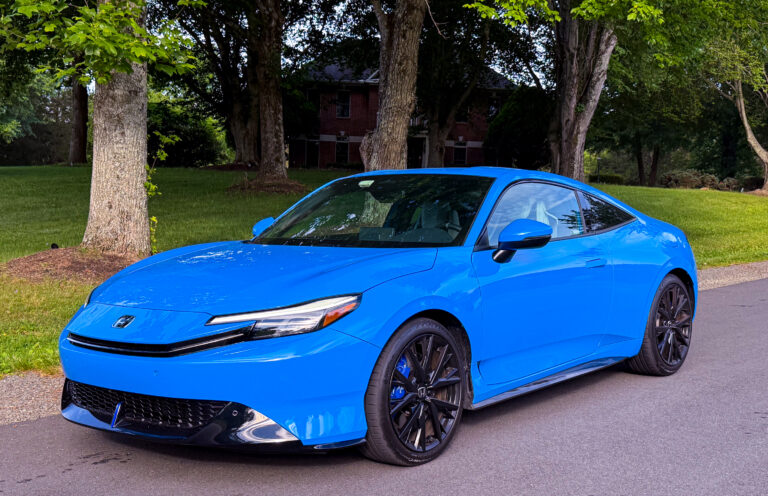
It might not be an all-out sports car, but it’s still engaging to drive. Credit: Jonathan Gitlin
I found GT mode to be the Prelude’s sweet spot. Throttle response is impressively quick—sharper than you’d expect from a typical turbocharged non-hybrid, though it doesn’t quite match the instant punch of the sportiest EVs.
S+ is the real party trick. Its ability to mimic the feel of a paddle-shift transmission adds another layer of involvement on twisty roads, making the Prelude feel more engaging without turning it into something it isn’t.
Most of the time, though, I left S+ switched off and used the steering-wheel paddles instead to adjust the level of regenerative braking when lifting off the accelerator. The system ranges from just 0.02 g, which allows the car to coast almost freely, up to 0.2 g. That’s less aggressive than the regeneration you’ll find in many battery-electric vehicles, but it’s still strong enough to recreate a convincing engine-braking effect.
Type-R Goodies
There’s more to the Prelude’s driving experience than an efficient powertrain with a sporty edge. Honda has widened both the front and rear tracks, much like the Civic Type R, and the Prelude borrows several key chassis components from its hotter sibling. That includes the Type R’s dual-axis front suspension, multilink rear setup, and adaptive dampers, although Honda recalibrated the dampers to deliver a more comfortable ride. In fact, the Prelude’s firmest setting is still slightly softer than the Type R’s softest.
The result is impressive grip, particularly with the optional $1,200 summer tires fitted to our test car. The hybrid powertrain naturally encourages you to carry speed through corners rather than relying on a traditional point-and-shoot driving style. There’s so much front-end grip that the Prelude can attack corners far faster than you might expect, with barely a squeal from the tires as you carry momentum through the apex.
Despite weighing considerably more than a Mazda Miata or Subaru BRZ, the Prelude feels surprisingly light on its feet. Compared with the crossovers and EVs that make up much of today’s automotive landscape, it’s remarkably nimble and responsive.
If you prefer to keep a low profile, however, the Prelude might not be the ideal choice—especially in the $455 Boost Blue Pearl paint seen here. I can’t remember the last car I drove that attracted this much attention. Other drivers regularly asked about it in traffic, while pedestrians stopped to take a closer look whenever I parked. Whatever you think of the styling, it’s clear that Honda has created a shape people notice.
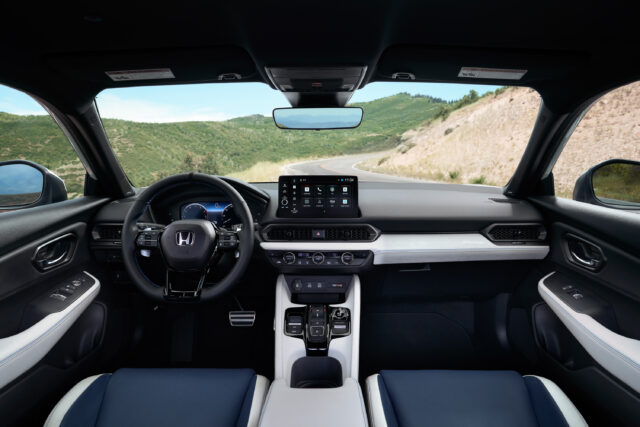
Left: The Prelude interior uses a lot from the Civic, but that’s not a bad thing. And yes, there’s CarPlay and Android Auto.Honda
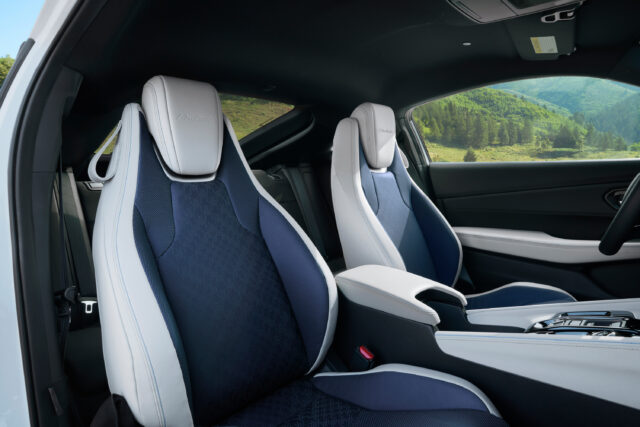
Right: The sporty front seats. Honda
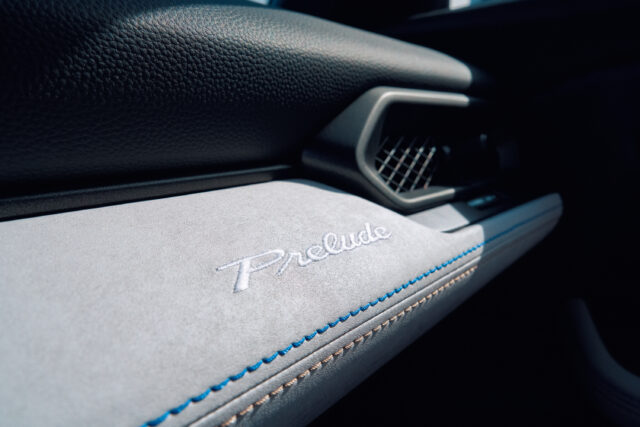
Left: The dash reminds you what you’re sitting in.Honda
Right: The back seats fold flat for more storage.Honda
The Prelude gets a sportier steering wheel and supportive sport seats, but much of the rest of the cockpit is shared with the Civic. That’s hardly a complaint. Honda has kept things refreshingly straightforward, with physical buttons and dials for most of the important controls.
The relatively small infotainment display is the only touchscreen in the cabin, and you rarely need to touch it. Temperature, volume, and other everyday functions all have dedicated controls, avoiding the frustrating trend of burying basic adjustments behind touchscreens or capacitive panels. I would have liked the infotainment screen to angle slightly more toward the driver, but that’s a minor complaint in an otherwise well-designed cabin.
The rear seats are best treated as occasional-use accommodations—more like the back seats of a Porsche 911 than something you’d regularly use for adults. They’re suitable for small children, pets, extra luggage, or the occasional emergency. Fortunately, the rear hatch adds useful practicality, offering 15.1 cubic feet (427 L) of cargo space despite the relatively shallow cargo area.
I’d Buy One
I didn’t expect the Prelude to win me over quite as completely as it did. It may not deliver the razor-sharp handling of a Mazda MX-5 or Subaru BRZ, while the Volkswagen Golf GTI offers more power and considerably more practicality. But neither can match the Prelude’s impressive efficiency, and the Honda gives up surprisingly little when it comes to driver engagement.
Then there’s the styling. Add its head-turning design to a $42,000 MSRP with a generous list of standard equipment, and the Prelude becomes an especially compelling package.
If I were shopping for a new car right now, the Prelude would be near the top of my list. Its combination of efficiency, everyday usability, distinctive looks, and enjoyable driving dynamics is difficult to ignore.
There is one catch: you probably won’t see them everywhere. Honda expects to sell only around 4,000 Preludes per year, making this sleek hybrid coupe a relatively rare sight on the road.
Pros
- Striking, head-turning design
- Excellent 44 mpg combined fuel economy
- Engaging and enjoyable driving experience
- Strong grip and nimble handling
- Comfortable ride with adaptive dampers
- Physical controls make the cabin easy to use
- Spacious hatchback cargo area
- Plenty of standard equipment
Cons
- Only 200 hp, which is modest for its price
- Heavier than true lightweight sports cars
- Rear seats are cramped and best for occasional use
- S+ transmission simulation can feel artificial
- Limited production means availability may be an issue
- $42,000 starting price is higher than some sportier alternatives
