
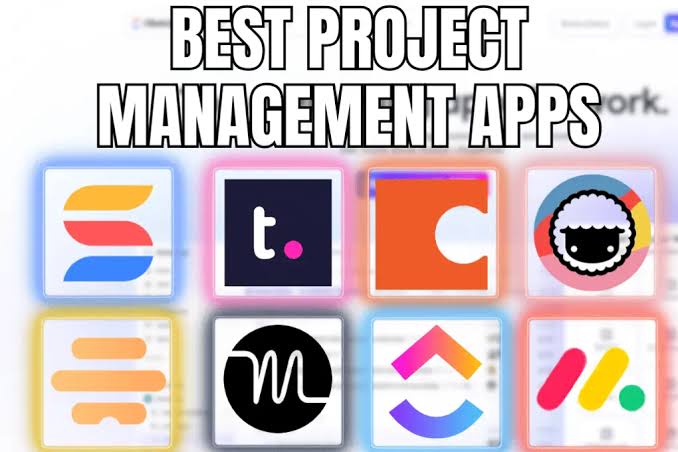
Best Project Management Software 2026 can make it much easier to organize tasks, track deadlines, manage workloads, and keep a team moving toward the same goals. But with so many platforms offering similar features, deciding which one is actually worth paying for can be difficult.
The best project management software in 2026 depends on what you need to manage. Some platforms are designed for simple task tracking, while others combine project planning, automation, AI, resource management, reporting, collaboration, and documentation in one workspace.
For most teams, ClickUp, Asana, monday.com, Jira, Wrike, Trello, Notion, and Basecamp are among the strongest options to consider. However, each platform has different strengths, pricing models, and levels of complexity.
This guide compares the top project management tools so you can identify the right option for your team, budget, and workflow.
Best Project Management Software at a Glance
| Software | Best For | Free Plan | Starting Paid Price* |
|---|---|---|---|
| ClickUp | All-in-one project management | Yes | $7/user/month |
| Asana | Structured team projects | Yes | $10.99/user/month |
| monday.com | Visual project management | Yes | From $9/seat/month |
| Jira | Software development | Yes | $7.91/user/month |
| Wrike | Complex workflows | Yes | $10/user/month |
| Trello | Simple Kanban projects | Yes | $5/user/month |
| Notion | Projects + documentation | Yes | $10/member/month |
| Basecamp | Client and team collaboration | Yes | $25/month |
*Prices shown are based on current official pricing information and annual-billing rates where applicable. Pricing, limits, and features can change.
Read More: Biggest Technology Trends 2026: AI Chips Cloud and Security
What Is Project Management Software?
Project management software is a digital workspace that helps individuals and teams plan, organize, execute, and monitor projects.
Instead of keeping tasks in spreadsheets, emails, documents, and chat messages, a project management platform brings important project information into one place.
Depending on the software, you may be able to:
- Create and assign tasks
- Set deadlines
- Build project schedules
- Track project progress
- Create Kanban boards
- Use Gantt charts
- Manage dependencies
- Track time
- Automate repetitive work
- Create reports and dashboards
- Share files
- Communicate with teammates
- Manage workloads
- Integrate other business applications
- Use AI to summarize, organize, or automate work
The right platform should reduce administrative work rather than create another complicated system your team has to maintain.
Best Project Management Software in 2026
ClickUp — Best Overall for All-in-One Work Management
ClickUp is one of the strongest choices for teams that want a large collection of project management features inside one platform.
Its free plan includes unlimited tasks and members, collaborative Docs, Kanban boards, sprint management, calendar views, two-factor authentication, and other core features. Its Unlimited plan is currently listed at $7 per user per month when billed annually, while Business is $12 per user per month when billed annually.
Paid plans add features such as Gantt charts, unlimited integrations, time tracking, custom fields, resource management, goals, portfolio management, dashboards, sprint reporting, and automation.
Best for: Teams that want one platform for tasks, projects, documentation, reporting, and collaboration.
Main advantages:
- Broad feature set
- Strong free plan
- Gantt charts
- Kanban boards
- Native time tracking
- Goals and portfolio management
- Automation
- Resource management
- Multiple project views
Potential drawback: The large number of features can make ClickUp feel overwhelming when you first start using it.
ClickUp is particularly attractive for teams that would otherwise need several separate applications to manage projects, documents, time, and collaboration.
Asana — Best for Structured Project Management
Asana is a strong choice for organizations that want a structured approach to projects and tasks without turning their workspace into an overly complicated system.
Its free Personal plan supports up to two users and includes unlimited tasks and projects, list, board, and calendar views, status updates, and more than 100 free integrations. The current Starter plan is listed at $10.99 per user per month when billed annually, while Advanced is $24.99 per user per month annually.
Asana becomes more useful for larger organizations through features such as portfolios, goals, workload management, approvals, and advanced project oversight.
Best for: Teams that prioritize clear project structures, task ownership, deadlines, and collaboration.
Main advantages:
- Clean project organization
- Strong task management
- Multiple project views
- Goals and portfolios
- Workload management on higher plans
- Large integration ecosystem
- Good fit for cross-functional teams
Potential drawback: Some advanced capabilities require higher-tier plans, which can make Asana more expensive as a team grows.
Asana is especially suitable for marketing, operations, creative, business, and cross-functional teams that need clear visibility into who is responsible for what.
monday.com — Best for Visual Workflows
monday.com takes a highly visual approach to work management. Its boards make it easy to represent projects using statuses, owners, deadlines, timelines, and other fields.
Its Standard plan currently includes timeline and Gantt views, guest access, sprint management, roadmap planning, dashboards, and other capabilities. The displayed annual price is $12 per seat per month for the project-management offering, although monday.com uses different product plans and pricing structures depending on the product and team configuration.
Best for: Teams that prefer visual boards and customizable workflows.
Main advantages:
- Highly visual interface
- Flexible boards
- Timeline and Gantt views
- Dashboards
- Automation
- Integrations
- Roadmap planning
- Capacity planning features
Potential drawback: Pricing can become more complicated because monday.com offers multiple products and seat structures.
monday.com can work particularly well for marketing teams, operations teams, product teams, and businesses that want to customize workflows around their existing processes.
Jira — Best for Software Development Teams
Jira is particularly strong for software development, agile teams, product teams, and technical organizations.
Its current Free plan supports up to 10 users and includes unlimited projects and work items, Scrum and Kanban boards, backlog management, list, board, timeline, calendar and summary views, reports, dashboards, and 100 automation rule runs per month.
The current Standard plan is listed at $7.91 per user per month, while Premium is $14.54 per user per month. Paid plans also include Atlassian’s Rovo AI features, while Premium adds stronger cross-team planning and dependency-management capabilities.
Best for: Software development, engineering, product, and agile teams.
Main advantages:
- Excellent Scrum support
- Kanban boards
- Backlogs
- Issue tracking
- Sprint planning
- Reporting
- Automation
- Dependency management
- Strong Atlassian ecosystem
- AI features on paid plans
Potential drawback: Jira can feel unnecessarily complex for teams that only need basic task and deadline management.
If your organization works with software releases, bugs, development sprints, technical issues, or product roadmaps, Jira deserves serious consideration.
Wrike — Best for Complex Workflows and Resource Management
Wrike is designed for organizations managing more complicated workflows, multiple teams, resources, and projects.
Its current Team plan is listed at $10 per user per month and includes interactive Gantt charts, dashboards, AI Essentials, and project management capabilities. Business is listed at $25 per user per month, while higher tiers add advanced resource and capacity planning, budgeting, reporting, and business intelligence capabilities.
Best for: Agencies, professional services organizations, enterprise teams, and businesses managing complex workflows.
Main advantages:
- Gantt charts
- Resource management
- Capacity planning
- Dashboards
- Advanced reporting
- Workflow customization
- AI features
- Budget tracking on higher plans
Potential drawback: Its advanced capabilities can be more than a small team needs.
Wrike makes more sense when project management involves multiple dependencies, teams, resources, budgets, and reporting requirements.
Trello — Best for Simple Kanban Project Management
Trello is one of the easiest project management tools to understand.
Its core workflow revolves around boards, lists, and cards. This makes it particularly useful for simple projects where users want to move work from stages such as “To Do” to “In Progress” and finally to “Done.”
Trello’s Free plan supports up to 10 collaborators per Workspace and includes unlimited cards, up to 10 boards, Power-Ups, due dates, assignments, mobile apps, and other core features. The Standard plan is currently $5 per user per month when billed annually.
Best for: Individuals, small teams, content calendars, simple workflows, and lightweight project management.
Main advantages:
- Very easy to learn
- Excellent Kanban experience
- Strong free plan
- Automation
- Power-Ups
- Mobile apps
- Low starting price
Potential drawback: Teams with complicated resource planning, dependencies, reporting, or portfolio requirements may eventually outgrow it.
Trello is a good example of why the most feature-rich platform is not always the best choice. If your workflow is simple, simplicity can be a major advantage.
Notion — Best for Projects and Documentation
Notion combines documents, databases, knowledge management, and project organization.
This makes it attractive to teams that want project information and documentation in the same workspace.
Its Free plan is available at $0 per member per month and includes features for organizing projects and information, basic forms, basic websites, calendar capabilities, and a trial of Notion AI features.
Best for: Startups, content teams, knowledge-heavy businesses, freelancers, and teams that need documentation alongside project management.
Main advantages:
- Flexible databases
- Documentation
- Wikis
- Project tracking
- Templates
- Knowledge management
- Custom workspaces
- Calendar integration
Potential drawback: Because Notion is extremely flexible, teams may need to design their own project-management system instead of relying on a predefined workflow.
Notion is particularly useful when project documentation, meeting notes, processes, and tasks need to live together.
Basecamp — Best for Simple Team and Client Collaboration
Basecamp takes a deliberately simpler approach to project management.
Rather than emphasizing highly technical project planning, it focuses on keeping projects, conversations, files, schedules, and to-dos organized in one place.
Its current pricing is also different from most competitors. Basecamp’s Freelancer plan costs $25 per month, Studio costs $59 per month with unlimited users, Pro costs $99 per month, and its Unlimited plan costs $299 per month when billed annually.
Best for: Agencies, freelancers, client projects, and teams that prefer simple collaboration.
Main advantages:
- Simple interface
- Fixed-price options
- No per-user fees on several plans
- Client collaboration
- To-do lists
- Project communication
- File sharing
- Templates
- Time tracking
Potential drawback: Teams looking for highly advanced dependencies, resource planning, or technical agile functionality may prefer another platform.
Basecamp’s fixed-price approach can also become attractive for larger teams because adding users does not necessarily increase the subscription cost.
Project Management Software Compared
The best tool depends heavily on the type of work you manage.
| Use Case | Recommended Software | Reason |
|---|---|---|
| Best overall | ClickUp | Broad feature set and strong value |
| Structured project management | Asana | Clear task and project organization |
| Visual workflows | monday.com | Flexible boards and dashboards |
| Software development | Jira | Agile and technical workflows |
| Complex projects | Wrike | Advanced planning and resource features |
| Simple projects | Trello | Easy Kanban workflow |
| Documentation + projects | Notion | Combines knowledge and project organization |
| Client collaboration | Basecamp | Simple communication and project structure |
| Small teams | ClickUp / Trello | Strong entry-level options |
| Enterprise workflows | Wrike / Jira / Asana | Advanced control and scalability |
Best Free Project Management Software
Several project management platforms offer usable free plans, but they are not equivalent.
ClickUp stands out if you want a broad range of project features without immediately paying. Its Free Forever plan includes unlimited tasks and members, Kanban boards, Docs, sprint management, calendar views, and other features.
Trello is excellent if your main requirement is simple board-based task management. Its free plan supports up to 10 collaborators and unlimited cards.
Jira is especially compelling for small development teams because its free plan supports up to 10 users and includes Scrum and Kanban functionality, backlogs, project views, reports, dashboards, and automation.
Asana is another strong option for individuals and very small teams, although its current free Personal plan is limited to two users.
The best free option therefore depends on your workflow rather than simply which platform has the longest free feature list.
Best Project Management Software for Small Businesses
Small businesses generally need three things: ease of adoption, useful features, and predictable costs.
ClickUp is attractive for businesses that want many features at a relatively low starting price. Trello works well for simple workflows, while Asana is a strong choice for teams that want structured project management.
Wrike can also make sense when a small business manages more complex client work or resource-heavy projects.
One important consideration is how pricing scales. A low per-user price may look inexpensive initially but become significant when every employee requires a paid seat.
Best Project Management Software for Agencies
Agencies often have a different set of requirements than internal teams.
They may need to manage:
- Multiple clients
- Deadlines
- Content approvals
- Internal tasks
- Client communication
- Files
- Team workloads
- Billable time
- Recurring workflows
ClickUp, Asana, Wrike, and Basecamp are all worth considering.
Wrike is particularly interesting for agencies with sophisticated resource, capacity, budget, and reporting requirements. Its higher-tier plans include resource and capacity planning, budgeting, advanced reporting, and business intelligence features.
Basecamp can be a better fit for agencies that prioritize straightforward client communication and simple project organization.
Best Project Management Software for Developers
For software development teams, Jira is usually the most natural starting point because its workflow is designed around agile development, backlogs, boards, sprints, issues, and technical project tracking.
ClickUp can be a strong alternative for development teams that want broader work-management functionality.
Trello can work for small development projects, especially when the team mainly needs a simple Kanban workflow.
The key is to determine whether your development process requires specialized agile reporting, dependencies, release management, or integrations with your development stack.
Best Project Management Software for Remote Teams
Remote teams need more than task lists.
A useful platform should make project status, responsibilities, deadlines, files, and communication accessible without requiring constant meetings.
Asana, ClickUp, monday.com, and Basecamp are strong candidates because they can centralize project information and reduce dependence on scattered communication.
Notion can also work well for remote organizations that rely heavily on documentation and internal knowledge.
What Features Should Project Management Software Have?
Task Management
Task management is the foundation of most project platforms.
Look for the ability to:
- Assign tasks
- Set due dates
- Add priorities
- Create subtasks
- Add comments
- Attach files
- Track status
- Create recurring tasks
Kanban Boards
Kanban boards provide a visual representation of work.
They are especially useful when tasks move through predictable stages such as:
Backlog → In Progress → Review → Complete
Trello is particularly strong here, while ClickUp, Asana, monday.com, Jira, and Wrike also provide board-based workflows.
Gantt Charts
Gantt charts are more useful when projects contain deadlines, dependencies, and sequential activities.
They help teams understand:
- What needs to happen first
- Which tasks depend on others
- Whether deadlines overlap
- How schedule changes affect the project
ClickUp, Asana, monday.com, Wrike, and Jira provide timeline or Gantt-style planning at relevant plan levels.
Automation
Automation can remove repetitive administrative work.
For example, a system might automatically:
- Assign a task when its status changes
- Notify someone before a deadline
- Move an item to another stage
- Create recurring work
- Update fields
- Trigger another workflow
Automation becomes increasingly valuable as project volume grows.
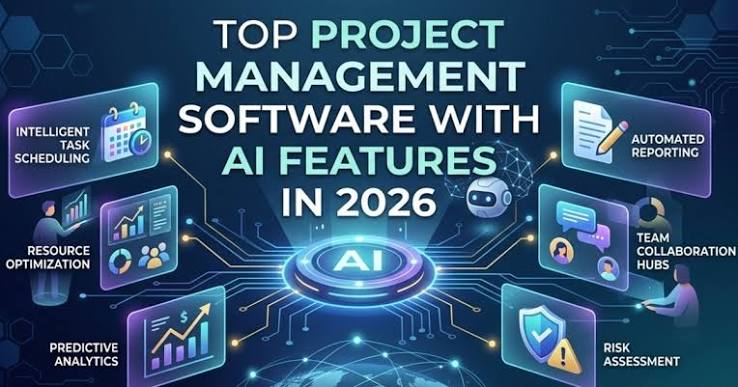
AI Features
AI is now becoming an important part of project management software.
Modern platforms are using AI for activities such as:
- Summarizing project discussions
- Creating or editing content
- Generating automation rules
- Summarizing work
- Identifying information
- Supporting workflow creation
- Assisting with planning
However, AI should not be the only reason to choose a platform. A tool with impressive AI features but a workflow your team dislikes can still be a poor investment.
Reporting and Dashboards
Managers often need a higher-level view than individual task lists.
Good reporting can help answer:
- Which projects are behind?
- How much work is outstanding?
- Which teams are overloaded?
- What has been completed?
- Where are bottlenecks occurring?
- Which deadlines are approaching?
Advanced reporting is particularly important for agencies, enterprise organizations, and teams managing many simultaneous projects.
Resource and Workload Management
Resource management helps organizations understand whether people have too much or too little work.
This is particularly important when multiple projects compete for the same employees.
Asana’s higher-tier plans include workload functionality, while Wrike provides advanced resource and capacity planning at higher tiers.
ClickUp vs Asana
ClickUp and Asana are two of the strongest general-purpose choices, but they approach project management differently.
ClickUp emphasizes a broad all-in-one feature set and currently starts at $7 per user per month on annual billing for its Unlimited plan. Asana’s Starter plan is currently $10.99 per user per month annually.
Choose ClickUp if you want:
- More features in one workspace
- Strong customization
- Gantt charts
- Native time tracking
- Resource management
- Broad workflow capabilities
Choose Asana if you want:
- A more structured experience
- Straightforward project organization
- Strong goals and portfolio management
- Clear cross-functional workflows
- A polished task-management experience
Neither is automatically better. The better choice depends on whether your priority is feature breadth or structured simplicity.
ClickUp vs monday.com
ClickUp is generally more attractive when you want a broad project-management platform with many built-in capabilities.
monday.com is particularly compelling when visual boards, dashboards, customizable workflows, and team-specific workspaces are the priority.
Before choosing between them, build the same sample project in both platforms. Pay attention to how quickly your team can create tasks, assign work, update status, build reports, and locate information.
The platform that requires less effort to maintain is often the better long-term choice.
Jira vs Asana
Jira is generally better suited to software development and agile workflows.
Asana is usually easier to position as a general-purpose project management platform for business, operations, marketing, and cross-functional teams.
Jira provides Scrum and Kanban boards, backlogs, project views, reports, dashboards, and development-oriented workflows.
Choose Jira when your workflow revolves around development issues, sprints, backlogs, and technical projects.
Choose Asana when the organization needs a broader business project-management environment.
How to Choose the Right Project Management Software
Start by defining the actual problem you want the software to solve.
Define Your Team Size
A freelancer has very different requirements from a 500-person organization.
Small teams should prioritize:
- Ease of use
- Free or affordable plans
- Simple collaboration
- Fast setup
Larger organizations should consider:
- Permissions
- Security
- Reporting
- Administration
- Scalability
- Data governance
- Resource management
Map Your Existing Workflow
Write down how a project currently moves from beginning to completion.
For example:
Idea → Planning → Assignment → Production → Review → Approval → Delivery
Then check whether the software can represent this process naturally.
Identify Essential Features
Separate features into three categories:
Must have: Features your team cannot work without.
Useful: Features that improve productivity but are not essential.
Unnecessary: Features that sound impressive but will not solve a real problem.
This prevents you from paying for functionality your team will never use.
Calculate the Real Cost
Do not look only at the advertised monthly price.
Calculate:
Number of paid users × price per user × billing period
Then consider additional costs such as:
- AI credits
- Premium integrations
- Storage
- Add-ons
- Advanced reporting
- Enterprise security
- Additional guest or collaborator requirements
Fixed-price models can also change the calculation. Basecamp, for example, offers plans where unlimited users are included at certain tiers rather than charging for every individual user.
Test With a Real Project
A free trial is much more useful when you use it with an actual project.
Create a realistic project containing:
- Multiple tasks
- Several team members
- Deadlines
- Dependencies
- Files
- Comments
- Recurring work
- A reporting requirement
Then ask the team whether the platform makes their work easier.
Common Mistakes When Choosing Project Management Software
Choosing Too Many Features
More features do not automatically mean better project management.
If your team only needs tasks, deadlines, and a Kanban board, an enterprise platform may create unnecessary complexity.
Choosing Only Based on Price
The cheapest software can become expensive if it requires workarounds, additional applications, or excessive manual administration.
Consider total value rather than subscription price alone.
Ignoring User Adoption
The best software is useless if employees refuse to use it.
A slightly less powerful platform with high adoption can produce better results than a feature-heavy system nobody maintains properly.
Forgetting About Scalability
A tool that works for five people may become difficult to manage with 100.
Consider what happens when you need:
- More users
- More projects
- More permissions
- More automation
- More reporting
- More integrations
Paying for Advanced Features Too Early
Do not automatically purchase the highest plan.
Start with the capabilities your team genuinely needs and upgrade when a real limitation appears.
What Is the Easiest Project Management Software to Use?
Trello is one of the easiest options because its board-and-card system is simple to understand.
Asana is another strong choice for teams that want structured project management without excessive complexity.
ClickUp offers more functionality but may require more setup and learning.
The easiest platform depends on how complicated your workflow is.
What Is the Best Free Project Management Software in 2026?
There is no single winner for every user.
ClickUp is a strong choice for users who want a large feature set.
Trello is excellent for simple Kanban workflows.
Jira is especially useful for small software-development teams.
Asana works well for individuals and very small teams that want structured task management.
The best free plan is the one that supports your actual workflow without forcing you to create complicated workarounds.
Is Project Management Software Worth It?
For teams managing multiple projects, deadlines, people, and dependencies, project management software can provide significant value.
It can reduce time spent searching for information, clarify ownership, improve visibility, and make deadlines easier to track.
However, software alone will not fix a poorly defined process.
Before introducing a new platform, establish basic rules for:
- Who creates tasks
- Who assigns work
- How priorities are determined
- How deadlines are set
- When tasks are considered complete
- How project updates are communicated
A clear process combined with suitable software is much more effective than simply purchasing another tool.
Conclusion
Choosing the best project management software in 2026 comes down to your team’s size, workflow, budget, and the level of control you need over your projects.
ClickUp is a strong all-around option for teams looking for a feature-rich workspace, while Asana is a better fit for structured project and task management. monday.com stands out for visual and customizable workflows, and Jira is particularly well suited to software development and agile teams. Wrike is worth considering for complex projects that require advanced resource planning and reporting. For simpler workflows, Trello provides an easy-to-use Kanban experience, while Notion works well for teams that want project management combined with documentation. Basecamp is another practical option for straightforward team and client collaboration.
Before choosing a platform, consider the features your team actually needs rather than selecting the software with the longest feature list. Compare pricing, ease of use, integrations, automation, reporting, scalability, and available support. Most importantly, test the platform with a real project before committing to a long-term plan.
The right project management software should make work easier to organize, improve visibility, reduce repetitive tasks, and help your team complete projects more efficiently. When the software matches your workflow instead of forcing your team to change everything around it, it becomes a useful part of your daily operations rather than another tool to manage.

1 Comment
Pingback: What Is Generative AI? How It Works, Uses & Examples