
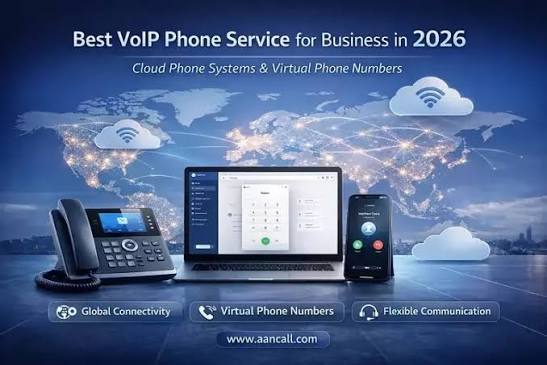
Choosing the best VoIP services for small business in 2026 is about more than finding the lowest monthly price. A good business phone system should give your team reliable calling, professional call handling, messaging, mobile access, useful integrations, and enough flexibility to grow without forcing you into unnecessary hardware or complicated contracts.
VoIP, or Voice over Internet Protocol, allows businesses to make and receive calls through an internet connection instead of relying on traditional telephone infrastructure. Modern services can also combine business calling with SMS, video meetings, team messaging, call recording, CRM integrations, analytics, and AI features.
For most small businesses, RingCentral, Nextiva, Zoom Phone, Ooma, Dialpad, and 8×8 are among the strongest options to consider. However, the right choice depends on your budget, team size, calling requirements, international needs, and the software your business already uses.
Best VoIP Services for Small Business at a Glance
| VoIP Service | Best For | Starting Price* | Standout Features |
|---|---|---|---|
| RingCentral | Best overall | $19.99/user/month annually | Calling, messaging, video, integrations, AI |
| Nextiva | Customer communications | $15/user/month | Voice, SMS, video, routing, team chat |
| Zoom Phone | Affordability and Zoom users | Varies by plan | Phone, meetings, SMS, integrations, AI |
| Ooma | Transparent pricing | $19.95/user/month | Virtual receptionist, mobile app, business calling |
| Dialpad | AI-powered calling | $15/user/month | AI recaps, calling, messaging, video |
| 8×8 | International businesses | Custom pricing | Global communications, analytics, integrations |
*Prices and features can vary by billing term, location, user count, plan, taxes, and optional add-ons. Check the provider’s current pricing before purchasing.
1. RingCentral — Best Overall VoIP Service
RingCentral is one of the strongest choices for small businesses that want a complete communications platform rather than a basic internet phone service.
Its RingEX platform combines business calling with messaging and, on higher plans, video meetings, fax, analytics, integrations, and advanced call management. RingCentral currently lists its Essentials plan from $19.99 per user per month when billed annually, while higher plans add features such as broader integrations, call recording, analytics, and additional administration tools.
Why RingCentral stands out
RingCentral is particularly useful for businesses that expect their communication requirements to become more sophisticated over time.
Depending on the plan, businesses can get:
- Business and toll-free numbers
- Unlimited calling within the US and Canada on applicable plans
- Business SMS
- Voicemail-to-text
- Team messaging
- Video meetings
- Internet fax
- Call recording
- CRM integrations
- Microsoft 365, Google Workspace, and Slack integrations
- Advanced call handling
- Analytics
- Mobile and desktop applications
RingCentral also offers optional AI products, including AI Receptionist and Conversation Intelligence, which can add automation and call-analysis capabilities beyond the standard plan.
Read More: Latest Technology News 2026: Biggest Tech Updates This Month
Potential drawback
RingCentral can become more expensive as you add advanced capabilities. Some AI and customer-engagement functions are sold as additional products, so businesses should calculate the complete monthly cost instead of comparing only the entry-level subscription.
Best for
Growing small businesses that want an all-in-one communications platform with room to scale.
2. Nextiva — Best for Customer Communications
Nextiva is a strong choice for companies that communicate with customers through multiple channels and want phone service combined with broader customer-communication tools.
Nextiva currently lists its Core plan at $15 per user per month and its Engage plan at $25 per user per month, with higher-level offerings designed for businesses requiring more advanced customer experience and contact-center capabilities.

What Nextiva offers
Its Core plan includes:
- Inbound and outbound voice
- Business SMS
- Video meetings
- Screen and file sharing
- Call routing
- Team chat
- Mobile app
The Engage plan adds capabilities such as customer-to-team SMS, toll-free numbers and minutes, advanced reporting, inbound call-center functionality, live chat, and chatbot features.
Why choose Nextiva?
Nextiva makes particular sense for businesses where the phone system is part of a larger customer-service workflow.
For example, a growing service company may need more than employees simply answering calls. It may also need routing, customer texting, reporting, web chat, and a structured way to manage incoming interactions.
Potential drawback
Some of the more advanced customer-experience capabilities sit in higher-priced plans or add-ons. A very small business that only needs basic calling may not need all of them.
Best for
Small businesses that prioritize customer communication, call routing, and unified communication tools.
3. Zoom Phone — Best for Businesses Already Using Zoom
Zoom is no longer simply a video-meeting platform. Zoom Phone extends the company’s communications ecosystem into business calling and can be particularly attractive to companies already using Zoom Workplace.
Zoom’s current Phone offering combines calling with features such as domestic SMS/MMS, online fax, call recording, integrations, centralized administration, and calling through different devices and applications. Its AI capabilities include post-call summaries, voicemail prioritization, and task extraction.
Key advantages
Businesses can use Zoom Phone for:
- Business calling
- SMS and MMS
- Call recording
- Online fax
- Mobile and desktop calling
- CRM integrations
- Microsoft and Google integrations
- Salesforce and Slack integrations
- Centralized administration
- AI-powered call summaries
- Task extraction
This can reduce the need to manage separate communication applications.
Why Zoom Phone can be a good value
If your team already relies heavily on Zoom for meetings and collaboration, adding phone service to the same ecosystem can simplify administration and employee workflows.
Potential drawback
International calls may be charged separately depending on the plan and destination, so businesses with substantial international calling should review the specific rates before choosing a plan.
Best for
Small businesses already using Zoom or teams that want meetings, calling, messaging, and collaboration in one ecosystem.
4. Ooma — Best for Transparent Small-Business Pricing
Ooma is particularly appealing to small businesses that want straightforward published pricing.
Ooma currently lists three Ooma Office plans:
- Essentials — $19.95 per user/month
- Pro — $24.95 per user/month
- Pro Plus — $29.95 per user/month
These are monthly prices, and Ooma states that there are no contracts for its Office plans. Applicable taxes and fees can vary by location.
Ooma Essentials
The entry-level plan includes features such as:
- Business phone service
- Unlimited calling in the US, Canada, Mexico, and Puerto Rico
- Virtual receptionist
- Mobile app
- Toll-free number
- Digital fax
Ooma Pro
The Pro plan adds:
- Desktop app
- Text messaging
- Videoconferencing
- Call recording
- Enhanced call blocking
Ooma Pro Plus
The highest tier adds capabilities such as:
- AI transcription
- AI insights
- CRM integrations
- Advanced call queues
- Hotdesking
Ooma also supports CRM workflows involving platforms such as Salesforce, HubSpot, and Microsoft Dynamics 365.
Potential drawback
Businesses with substantial international calling requirements should check the applicable international rates. Taxes, fees, additional numbers, and optional services can also increase the final bill.
Best for
Small businesses that want predictable published pricing and a traditional business-phone experience with modern features.
5. Dialpad — Best for AI-Powered Business Calling
Dialpad takes a more AI-focused approach to business communications.
Dialpad’s Connect plans currently start at $15 per user per month, and its platform combines phone calls with video meetings, instant messaging, SMS, and AI-powered communication features.
Key Dialpad features
Depending on the plan, businesses can access:
- Business calling
- Desktop and mobile applications
- SMS
- Video conferencing
- Instant messaging
- Call forwarding
- AI call summaries
- Meeting recaps
- Action items
- Call intelligence
Its AI Recaps feature can automatically produce summaries after meetings and calls, helping employees avoid manually taking notes.
Why AI matters
For sales and customer-service teams, the value of AI is not simply having a chatbot. Useful AI can reduce administrative work by turning conversations into searchable summaries and actionable information.
For example, after a sales call, an employee may want to know:
- What did the customer request?
- What objections were mentioned?
- What follow-up is required?
- Who is responsible for the next step?
AI-powered transcription and summaries can help answer those questions without requiring someone to replay the entire conversation.
Potential drawback
Businesses that do not need AI, call intelligence, or unified communication features may find a simpler phone system more appropriate.
Best for
Small businesses that want AI-assisted calling, meeting summaries, and modern communication software.
6. 8×8 — Best for International Businesses
8×8 is worth considering when international communication and broader customer-experience requirements are more important than finding the lowest advertised monthly price.
8×8 offers unified communications through 8×8 Work, including calling, meetings, messaging, analytics, integrations, and global coverage. Its broader platform also includes contact-center and communications API capabilities.
Why 8×8 is different
International businesses may need:
- Global phone numbers
- International calling
- Multiple communication channels
- Contact-center functionality
- Analytics
- Integrations
- Customer-experience tools
- Scalable administration
8×8 is positioned more toward businesses that need a broader communications platform rather than simply a replacement for one office phone.
Potential drawback
8×8’s current pricing approach is more customized, with its pricing page directing businesses toward tailored solutions and quotes.
That makes direct price comparison harder than with providers such as Ooma or Nextiva.
Best for
Businesses with international teams, customers, or more advanced communications requirements.
VoIP Pricing for Small Businesses in 2026
Pricing is one of the most important considerations when choosing a business phone system, but the advertised starting price should not be the only number you compare.
Current provider pricing shows that entry-level cloud phone plans commonly fall around the $15–$30 per-user-per-month range, while advanced customer-experience and contact-center products can cost considerably more. Nextiva, for example, currently starts at $15 per user/month for Core, while RingCentral lists RingEX Essentials from $19.99 per user/month when paid annually.
A realistic VoIP budget should account for:
- Number of users
- Monthly vs annual billing
- Business phone numbers
- Additional numbers
- International calling
- Taxes and regulatory fees
- Hardware
- Premium features
- AI add-ons
- CRM integrations
- Contact-center features
- Implementation or professional services
For example, Ooma publishes separate pricing for additional numbers and notes that taxes and fees vary by location.
Example monthly budget
Suppose a five-person business chooses a $20-per-user plan.
5 users × $20 = $100/month
But the actual bill could be higher if the company adds:
- Additional numbers
- Premium AI features
- International calling
- Physical phones
- Extra services
- Applicable taxes and fees
This is why the cheapest advertised plan is not always the cheapest complete solution.
What Features Should a Small Business Look For?
The right VoIP system should solve your actual communication problems rather than simply provide the longest feature list.
Business Phone Numbers
A professional phone system should allow you to use business numbers instead of requiring employees to give customers their personal mobile numbers.
Depending on the provider, you may be able to choose local, toll-free, or other virtual numbers.
Auto Attendant
An auto attendant answers incoming calls and directs callers to the correct department or employee.
For example:
Press 1 for Sales
Press 2 for Support
Press 3 for Billing
This can make a small company appear more organized without requiring a full-time receptionist.
Call Routing
Call routing determines where incoming calls go.
A business might route calls based on:
- Department
- Employee
- Business hours
- Customer selection
- Location
- Availability
This is particularly important when employees work remotely.
Business SMS
Text messaging can be valuable for appointment confirmations, customer questions, reminders, and quick updates.
However, businesses should check message limits and compliance requirements instead of assuming every plan includes unlimited business texting.
Mobile Apps
A mobile application allows employees to use their business identity without carrying a separate physical business phone.
This is especially useful for:
- Remote employees
- Sales representatives
- Consultants
- Field workers
- Hybrid teams
CRM Integrations
CRM integration can connect calls and customer records.
Instead of manually searching for a customer after every call, an integrated system may help employees access relevant customer information and keep communication history organized.
Call Recording
Call recording can be useful for:
- Training
- Quality assurance
- Customer-service reviews
- Sales coaching
- Documentation
Businesses should understand applicable privacy and consent requirements before recording calls.
AI Features
Modern VoIP platforms increasingly offer:
- Transcription
- Call summaries
- Action items
- Sentiment analysis
- AI receptionists
- Conversation intelligence
- Automated routing
AI should be treated as a productivity tool, not a reason to automatically choose a more expensive plan.
VoIP vs Traditional Phone Systems
Traditional phone systems generally require more physical infrastructure, while cloud VoIP systems are hosted by the provider and accessed through the internet.
| Feature | VoIP | Traditional Phone System |
|---|---|---|
| Infrastructure | Internet-based | Dedicated telephone infrastructure |
| Remote work | Excellent | More difficult |
| Scalability | Usually flexible | Often more involved |
| Hardware | Optional in many cases | Often required |
| Mobile access | Common | Limited |
| Software integrations | Broad | More limited |
| AI features | Increasingly common | Rare |
| Maintenance | Mostly provider-managed | More customer-managed |
| Upfront investment | Usually lower | Can be higher |
For many modern small businesses, VoIP is attractive because employees can use apps and compatible devices instead of being tied to a particular office desk.
Do You Need a VoIP Desk Phone?
Not necessarily.
Many VoIP services support softphones, which are applications that turn a computer or smartphone into a business phone.
A small business can potentially use:
- Desktop applications
- Mobile applications
- Web applications
- Headsets
- Compatible IP phones
- Existing supported hardware
This means you do not necessarily need to purchase a traditional-looking phone for every employee.
A physical desk phone can still make sense for:
- Reception desks
- Front offices
- Customer-service stations
- Employees who prefer physical handsets
- Businesses with dedicated office workstations
The best setup is often a combination of software and physical phones rather than choosing only one.
What Do You Need Before Switching to VoIP?
Before signing up, check a few practical requirements.
Reliable Internet
VoIP depends on your network connection. A fast connection alone does not guarantee good call quality.
Important factors include:
- Stability
- Latency
- Jitter
- Packet loss
- Wi-Fi reliability
- Network congestion
If voice quality is important, consider using wired Ethernet for fixed office devices and prioritizing voice traffic on larger networks.
Compatible Devices
Decide whether employees will use:
- Computers
- Smartphones
- Desk phones
- Headsets
- A mixture of devices
Check hardware compatibility before buying phones.
Existing Phone Numbers
If you already have business numbers, determine whether the new provider supports number porting.
Do not cancel your existing service before the port is completed unless the provider specifically instructs you to do so.
Business Software
Make a list of the tools your team already uses.
For example:
- Microsoft 365
- Google Workspace
- Salesforce
- HubSpot
- Slack
- Microsoft Teams
Then check whether your preferred VoIP provider integrates with those systems.
Emergency Calling
Businesses should also understand how the provider handles emergency calling and location information in their jurisdiction.
Requirements vary by country and location, so this should be checked before deployment.
Can You Keep Your Existing Business Phone Number?
In many cases, yes.
Number portability is one of the major benefits of switching to a new business phone provider without having to completely change your public identity.
The exact process varies, but providers generally require account information associated with the existing number.
For example, RingCentral states that existing numbers can be ported to its service and explains that porting is a standard part of moving to its platform.
Before porting a number
Make sure you:
- Have the correct account information
- Verify the number is eligible
- Follow the provider’s porting instructions
- Keep your existing service active during the transfer
- Confirm that important inbound calls still work after the transfer
Never assume that cancelling the old phone service first will speed up the process. It can create unnecessary complications.
Common VoIP Problems and What to Check
VoIP is generally reliable, but poor network conditions can create problems.
Poor Call Quality
If voices sound robotic, distorted, or unclear, check:
- Internet stability
- Wi-Fi signal
- Network congestion
- Headset quality
- Packet loss
- Router configuration
Dropped Calls
Dropped calls can result from unstable internet, device problems, application issues, or network changes.
Test whether the problem occurs:
- On one device
- Across multiple employees
- Only on Wi-Fi
- Only during busy periods
This helps identify whether the problem is local or system-wide.
One-Way Audio
If one person can hear the other but not vice versa, network configuration, firewall settings, device problems, or provider-side issues may be involved.
Restarting the application and testing another network can help isolate the cause.
Delayed Audio
Noticeable delays can indicate network latency or congestion.
If delays happen regularly, check your internet connection and network performance rather than immediately replacing the phone hardware.
VoIP Mistakes Small Businesses Should Avoid
Choosing Only by Monthly Price
A $15 plan may look better than a $25 plan until you discover that the cheaper plan lacks the feature your team actually needs.
Compare total cost and included functionality.
Ignoring Add-On Costs
AI, advanced call queues, additional numbers, international calling, and other features may cost extra.
Always calculate the expected final bill.
Buying Hardware Too Early
Do not purchase dozens of desk phones before confirming what your provider supports.
Test the software first and determine which employees actually need physical devices.
Forgetting International Calling Rates
If your company regularly calls customers overseas, domestic unlimited calling may have little relevance to your actual phone bill.
Check destination-specific international rates.
Not Testing the Network
A VoIP system is only as good as the network supporting it.
Test internet stability and call quality before moving every employee to the new system.
Paying for Features Nobody Uses
Advanced analytics and AI can be valuable, but only when they solve a real business problem.
A simple plan that your team fully uses can provide better value than an expensive plan packed with unused features.
How to Choose the Right VoIP Service
Instead of asking only which provider is “best,” start with your business requirements.
Choose RingCentral if…
You want a comprehensive communications platform with strong integrations, scalability, and advanced business features.
Choose Nextiva if…
Customer communication, call routing, SMS, reporting, and broader customer-experience capabilities are important.
Choose Zoom Phone if…
Your company already uses Zoom heavily or you want calling integrated with meetings and collaboration.
Choose Ooma if…
You want clearly published small-business pricing and a straightforward business phone system.
Choose Dialpad if…
AI-powered calling, meeting summaries, and communication intelligence are high priorities.
Choose 8×8 if…
Your company has international communication requirements or needs broader unified communications and customer-experience capabilities.
Frequently Asked Questions
What is the best VoIP service for a small business?
There is no single best provider for every company. RingCentral is a strong overall choice, while Nextiva is particularly useful for customer communications, Ooma for transparent pricing, Zoom Phone for businesses already using Zoom, Dialpad for AI-focused communication, and 8×8 for international requirements.
How much does small business VoIP cost?
Entry-level business VoIP plans commonly start around $15 to $30 per user per month, depending on the provider and billing arrangement. Advanced features and contact-center services can increase the cost substantially. Current examples include Nextiva Core at $15/user/month and RingCentral Essentials from $19.99/user/month when billed annually.
Is VoIP cheaper than a traditional phone system?
It can be, particularly when a business no longer needs expensive on-premises telephone hardware and maintenance. However, the actual savings depend on the provider, number of users, calling patterns, hardware requirements, and additional services.
Can I keep my existing business number?
Usually, yes. Many business VoIP providers support number porting. Check eligibility and follow the provider’s porting process before cancelling your existing service.
Do I need a special VoIP phone?
No. Many providers support desktop and mobile applications, so employees can make calls using computers or smartphones. Physical IP phones are optional for many businesses.
Is VoIP reliable for business calls?
Yes, when supported by a stable internet connection and properly configured network. Poor bandwidth, high latency, jitter, packet loss, or network congestion can affect call quality.
Can VoIP work for remote employees?
Yes. Remote access is one of the major advantages of cloud VoIP. Employees can often use a mobile or desktop application instead of being tied to an office phone.
Does VoIP support business texting?
Many modern platforms support business SMS, although message limits and available features vary by provider and plan.
Is VoIP secure?
Cloud VoIP providers use different security measures, but businesses should still review account security, authentication, administrative controls, encryption practices, compliance requirements, and emergency-calling capabilities before choosing a service.
Is VoIP good for international calls?
It can be, but businesses should compare international rates and included destinations carefully. A plan with unlimited domestic calling does not necessarily include unlimited international calls.
Conclution
The best VoIP services for small business in 2026 are not interchangeable because each platform targets a slightly different business need.
RingCentral is the strongest all-around option for businesses that want a mature communications platform with room to grow. Nextiva is particularly attractive for customer-facing teams that need voice, SMS, routing, reporting, and customer-experience tools. Zoom Phone makes sense for businesses already invested in the Zoom ecosystem. Ooma is a strong choice for small companies that value transparent pricing and straightforward business-phone features. Dialpad stands out when AI-powered communication is a priority, while 8×8 deserves consideration from businesses with international or more advanced communication requirements.
Before choosing, compare the total cost rather than just the advertised starting price, verify the features your employees actually need, check international calling rates if relevant, test your network, and confirm that your existing phone numbers and business software can be supported.
For most small businesses, the best VoIP system is not the one with the longest feature list. It is the one that provides reliable calling, useful business features, manageable costs, and enough flexibility to support the way your team actually works.
