

The Future of Technology is being shaped by artificial intelligence, autonomous systems, advanced computing, robotics, cybersecurity, and new approaches to digital trust. Technology is moving beyond traditional software and becoming more intelligent, connected, and capable of interacting with the physical world.
For businesses and consumers, these changes will influence how software is developed, how people work, how data is protected, and how products are designed. Understanding the most important technology trends can help you identify practical opportunities while separating meaningful innovation from short-term hype.
1. Artificial Intelligence Will Become More Integrated
Artificial intelligence is likely to remain one of the strongest forces shaping the future of technology.
The important change is not simply that AI models are becoming more capable. AI is increasingly being integrated into the products, software, devices, and workflows people already use.
Instead of opening a separate AI application, users may increasingly interact with AI through:
- Search
- Smartphones
- Computers
- Business software
- Customer-service systems
- Productivity applications
- Development tools
- Smart devices
This represents a shift from AI as a separate tool toward AI as an integrated technology layer.
Read More: Biggest Tech Industry Changes of 2026 You Should Know
Why AI integration matters
Businesses can use AI to assist with:
- Research
- Data analysis
- Content creation
- Software development
- Customer support
- Workflow automation
- Decision support
The future will therefore focus less on whether companies can use AI and more on whether they can use it reliably, securely, and economically.
2. AI Agents Will Change How People Use Software
AI agents are one of the most important developments in the future of technology.
Traditional software usually requires users to perform individual actions. An AI agent can potentially coordinate multiple actions to accomplish a larger goal.
For example, instead of manually researching information, organizing it, and preparing a report, a user could give an AI system a broader objective and allow it to handle several steps.
A typical agentic workflow could involve:
- Understanding the user’s objective
- Gathering information
- Analyzing the information
- Using connected applications
- Completing specific actions
- Presenting the result for review
IEEE predicts that AI agents will become increasingly common in business environments for handling routine work, while Gartner lists multiagent systems among its major strategic technology trends for 2026.
Will AI agents replace traditional applications?
Not completely.
AI agents still depend on databases, APIs, cloud infrastructure, operating systems, and conventional applications.
The major change is likely to be the way people interact with software.
Instead of manually controlling every application, users may increasingly describe their desired outcome and let AI coordinate the underlying tools.
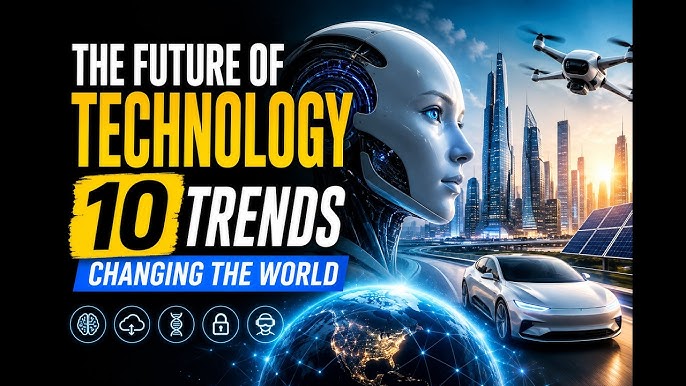
3. AI-Native Software Development Will Grow
Software development is another area where AI is changing established workflows.
AI coding systems can already assist developers with:
- Code generation
- Debugging
- Testing
- Documentation
- Code explanation
- Refactoring
- Prototyping
The next stage is AI-native development, where AI is incorporated into the development process from the beginning.
Gartner identifies AI-native development platforms as one of its top strategic technology trends for 2026.
What will happen to developers?
AI does not remove the need for software engineers.
Instead, developers may spend less time on repetitive implementation and more time on:
- Architecture
- Requirements
- Security
- Testing
- Code review
- Performance
- System design
- Product decisions
The ability to evaluate AI-generated code will become just as important as generating it.
Why human review still matters
AI-generated software can contain:
- Logical errors
- Security vulnerabilities
- Incorrect assumptions
- Inefficient implementations
- Compatibility problems
Therefore, faster code generation must be accompanied by stronger testing and verification.
4. Physical AI Will Bring Intelligence Into the Real World
For years, AI primarily existed inside software.
That is changing.
Physical AI connects artificial intelligence with machines that can perceive and interact with the physical environment.
Examples include:
- Robots
- Drones
- Autonomous vehicles
- Industrial machines
- Smart equipment
- Automated warehouse systems
Gartner identifies physical AI as a major 2026 technology trend, while Forrester highlights the movement of AI from digital workflows into robots, vehicles, and physical environments.
Where could physical AI be used?
Potential applications include:
- Manufacturing
- Warehousing
- Agriculture
- Logistics
- Transportation
- Industrial inspection
- Healthcare
- Construction
The technology still faces challenges involving safety, integration, reliability, cost, and workforce adaptation.
Therefore, physical AI should be viewed as an important developing technology rather than an overnight replacement for human labor.
5. Specialized AI Models Will Become More Important
One AI model cannot necessarily provide the best solution for every industry.
A bank, hospital, law firm, software company, and manufacturing business may require different types of information and different levels of control.
This is creating greater interest in domain-specific language models.
These systems are designed or adapted around particular industries, tasks, terminology, and workflows.
Gartner lists domain-specific language models among its 2026 strategic technology trends.
Why specialized AI matters
Specialized AI can potentially provide:
- Industry-specific terminology
- More relevant responses
- Better workflow integration
- Greater control
- More predictable results
- Support for specialized compliance requirements
This does not mean general-purpose AI will disappear.
Instead, the future may contain a combination of large general models, smaller specialized models, and AI systems designed for particular tasks.
6. AI Computing Infrastructure Will Continue to Expand
The future of technology depends not only on software but also on the infrastructure required to run it.
Advanced AI systems require significant computing resources.
This has increased the importance of:
- GPUs
- AI accelerators
- CPUs
- Neural processing units
- High-performance memory
- Networking
- Data centers
- Advanced cooling
Gartner identifies AI supercomputing platforms as a major technology trend for 2026, emphasizing their role in demanding AI and analytical workloads.
Why computing infrastructure matters
As AI workloads grow, organizations must consider:
- Performance
- Energy efficiency
- Cost
- Scalability
- Data location
- Hardware availability
The future technology race is therefore not only about who creates the best AI model.
It is also about who can efficiently provide the computing infrastructure needed to operate advanced AI systems.
7. Cybersecurity Will Become More Proactive
As technology becomes more connected and AI becomes more powerful, cybersecurity will become even more important.
Traditional security often focuses on detecting and responding to attacks.
The future is moving toward more proactive and preemptive cybersecurity.
Gartner lists preemptive cybersecurity and AI security platforms among its strategic technology trends for 2026.
How cybersecurity is changing
Organizations are increasingly focusing on:
- Continuous monitoring
- Identity protection
- Automated threat detection
- Vulnerability management
- AI security
- Cloud security
- Data protection
AI creates a dual challenge.
Defenders can use AI to detect suspicious behavior, while attackers can also use AI to automate or improve certain attacks.
This means security systems must become faster and more adaptive.
8. Digital Trust and Provenance Will Become Essential
The growth of generative AI is making digital content easier to create and modify.
People can now encounter AI-generated:
- Text
- Images
- Audio
- Video
- Software
- Documents
This creates an important question:
How do we know where digital information came from?
Digital provenance focuses on establishing the origin, history, and integrity of digital content and software.
Gartner identifies digital provenance as one of its 2026 strategic technology trends.
Why digital provenance matters
It can become particularly important for:
- News
- Financial information
- Government communications
- Business documents
- Software
- Online publishing
- AI-generated media
As synthetic content becomes easier to produce, trust becomes a technology problem as well as a social one.
9. Quantum Computing and Post-Quantum Security Will Develop
Quantum computing is another technology that could have a significant long-term impact.
Quantum computers use different computational principles from conventional computers and could eventually be useful for certain complex problems.
Potential applications include:
- Scientific simulation
- Materials research
- Optimization
- Drug discovery
- Cryptography
However, broad commercial impact is still developing.
Forrester places quantum computing further into the long-term category compared with technologies such as agentic software and physical AI.
Why quantum security matters now
One reason organizations are already paying attention is cybersecurity.
Future quantum computers could threaten some existing cryptographic systems.
The World Economic Forum identifies lattice-based cryptography as an important emerging technology for protecting information against both conventional and future quantum attacks.
This means organizations can begin preparing for post-quantum security before large-scale quantum computers become practical.
10. Technology Will Become More Connected to the Physical and Natural World
The future of technology is not only about faster computers and better software.
Technology is increasingly being connected with:
- Energy systems
- Biology
- Healthcare
- Transportation
- Manufacturing
- Climate systems
- Robotics
- Smart infrastructure
The World Economic Forum’s 2026 emerging technology report highlights areas ranging from world models and quantum-resistant cryptography to technologies in energy, health, materials, and computing.
World models and real-world intelligence
World models are AI systems designed to learn how aspects of the physical world behave.
They can use combinations of information such as:
- Video
- Sensor data
- Text
- Physical observations
This could eventually help AI systems reason about physical environments more effectively.
Potential applications include robotics and scientific modeling.
Future of Technology: 10 Trends at a Glance
| Technology Trend | What Is Changing? | Why It Matters |
|---|---|---|
| AI integration | AI is becoming part of everyday software | Makes technology more intelligent |
| AI agents | AI can coordinate multiple tasks | Automates workflows |
| AI-native development | AI assists throughout software creation | Changes development processes |
| Physical AI | AI is entering machines and robots | Connects digital intelligence with the physical world |
| Specialized AI | Models are designed for specific domains | Improves relevance and control |
| AI infrastructure | Demand for advanced computing is growing | Supports large-scale AI |
| Cybersecurity | Defense is becoming more proactive | Addresses evolving digital threats |
| Digital provenance | Content origin is becoming more important | Builds digital trust |
| Quantum computing | New computing approaches are developing | Could transform specialized workloads |
| World models | AI is learning physical-world dynamics | Supports robotics and scientific applications |
How These Technology Trends Will Affect Businesses
Businesses will not necessarily need to adopt every emerging technology.
The better approach is to identify specific problems and determine which technology can solve them.
For example:
Small businesses
Small companies may benefit from AI assistants, workflow automation, customer-service tools, and AI-powered data analysis.
Technology companies
Software businesses may prioritize AI-native development, AI security, specialized models, and cloud infrastructure.
Manufacturing companies
Physical AI, robotics, computer vision, and predictive systems may provide opportunities for automation and operational improvements.
Financial businesses
AI, cybersecurity, confidential computing, and post-quantum security may become particularly important because of the sensitivity of financial information.
The key principle is:
Technology should follow business needs, not the other way around.
How the Future of Technology Will Affect Consumers
Consumers will experience these changes through everyday products and services.
AI is increasingly appearing in:
- Smartphones
- Computers
- Search engines
- Digital assistants
- Cameras
- Online shopping
- Customer service
- Smart-home products
- Transportation
The biggest difference may be that technology becomes less visible.
Instead of opening a specific application to perform every task, users may increasingly interact with intelligent systems that coordinate several services in the background.
What should consumers pay attention to?
When buying or using AI-powered technology, consider:
- Privacy: What information is being collected?
- Security: How is personal data protected?
- Cost: Is the feature free or subscription-based?
- Reliability: Can important tasks be trusted to the system?
- Longevity: Will the feature continue receiving support?
- Usefulness: Does the technology solve a real problem?
Not every product marketed as “AI-powered” will provide meaningful benefits.
What Skills Will Matter in the Future of Technology?
Technology professionals will increasingly need a combination of technical and analytical skills.
Important areas include:
- Artificial intelligence
- Cybersecurity
- Cloud computing
- Data analysis
- Software development
- AI governance
- Automation
- Critical thinking
- Problem-solving
- System design
AI literacy will become useful even for people who are not professional developers.
The ability to understand what AI can do, where it can fail, and how to use it responsibly will become increasingly valuable.
What Are the Biggest Challenges Facing Future Technology?
Technology development also creates challenges.
Privacy
More intelligent systems may require access to more personal and business information.
Security
Connected systems create additional opportunities for cyberattacks.
Cost
Advanced AI infrastructure can require significant investment.
Regulation
Governments are developing rules around AI, privacy, security, and digital information.
Workforce disruption
Automation may change certain jobs and tasks, requiring workers to develop new skills.
Trust
AI-generated content makes it harder to distinguish authentic information from synthetic material.
These challenges do not mean technology should stop developing.
They mean innovation needs to be combined with responsible implementation.
What Will Technology Look Like in the Future?
The future of technology will likely be less about individual devices and more about interconnected intelligent systems.
AI may become an invisible layer across software, hardware, infrastructure, and physical machines.
A future workflow could involve an AI system understanding a user’s goal, selecting specialized models, accessing approved software, communicating with other AI agents, and interacting with physical systems when necessary.
This does not mean every futuristic prediction will become reality.
Technology adoption depends on cost, reliability, regulation, safety, infrastructure, and consumer demand.
The most successful technologies will be those that solve real problems better than existing alternatives.
FAQs About the Future of Technology
What is the biggest trend shaping the future of technology?
Artificial intelligence is currently the broadest technology trend because it is influencing software, hardware, cybersecurity, robotics, business operations, and consumer products.
Will AI agents replace traditional software?
No. AI agents are more likely to become an additional interaction and automation layer that works with existing software, databases, APIs, and infrastructure.
What is physical AI?
Physical AI refers to AI systems that operate in or interact with the physical world through robots, vehicles, drones, sensors, and intelligent equipment.
Will quantum computing replace normal computers?
No. Quantum computers are designed for specific types of problems and are not expected to replace conventional computers for everyday tasks.
Why is cybersecurity important for the future of technology?
As systems become more connected and AI becomes more powerful, the potential attack surface can increase. Strong cybersecurity will therefore be essential for protecting data, software, infrastructure, and users.
What are world models in AI?
World models are AI systems designed to learn patterns and dynamics of physical environments. They can help AI reason about how objects, environments, and events behave.
What skills will be important in the future technology industry?
AI literacy, cybersecurity, software development, data analysis, cloud computing, system design, critical thinking, and problem-solving are likely to remain valuable.
Will technology eliminate jobs?
Technology can automate certain tasks and change job responsibilities, but its effect varies by industry and occupation. New technologies can also create new roles and increase demand for people with specialized technical and human skills.
Conclusion
The Future of Technology is being shaped by AI, autonomous agents, physical intelligence, specialized models, advanced computing, cybersecurity, digital trust, quantum technologies, and increasingly connected systems. These trends are changing not only the technology industry but also the way businesses operate and consumers interact with digital products.
