

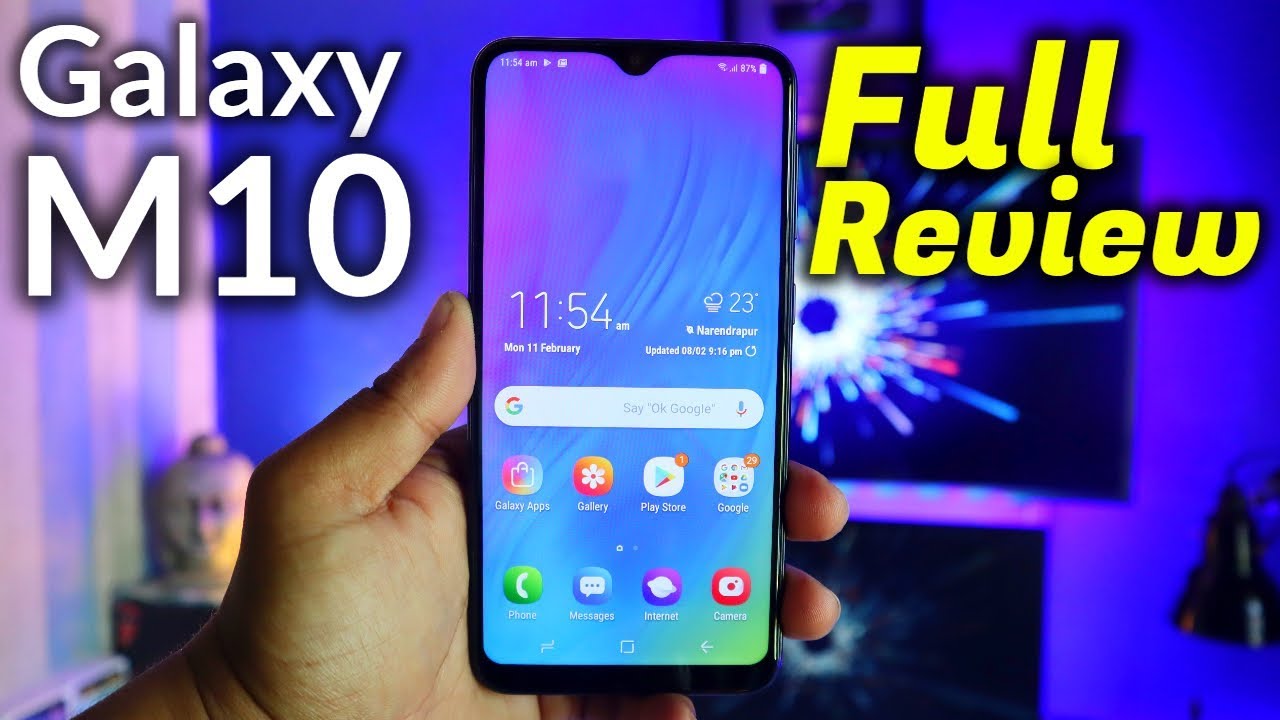
The all-new Galaxy M10 is focusing on features like design, long battery life, and camera capabilities. Read our Samsung Galaxy M10 review.

With Xiaomi, Realme, and Honor putting increasing pressure on Samsung in the entry-level smartphone market, the South Korean giant has finally stepped up its game.
The new Galaxy M10 and Galaxy M20 are designed with younger users in mind, placing a strong emphasis on modern styling, long-lasting battery life, and capable cameras. But can these features give Samsung an edge against the growing competition from Chinese smartphone brands? Our Samsung Galaxy M10 review takes a closer look.
Galaxy M10 review: Design
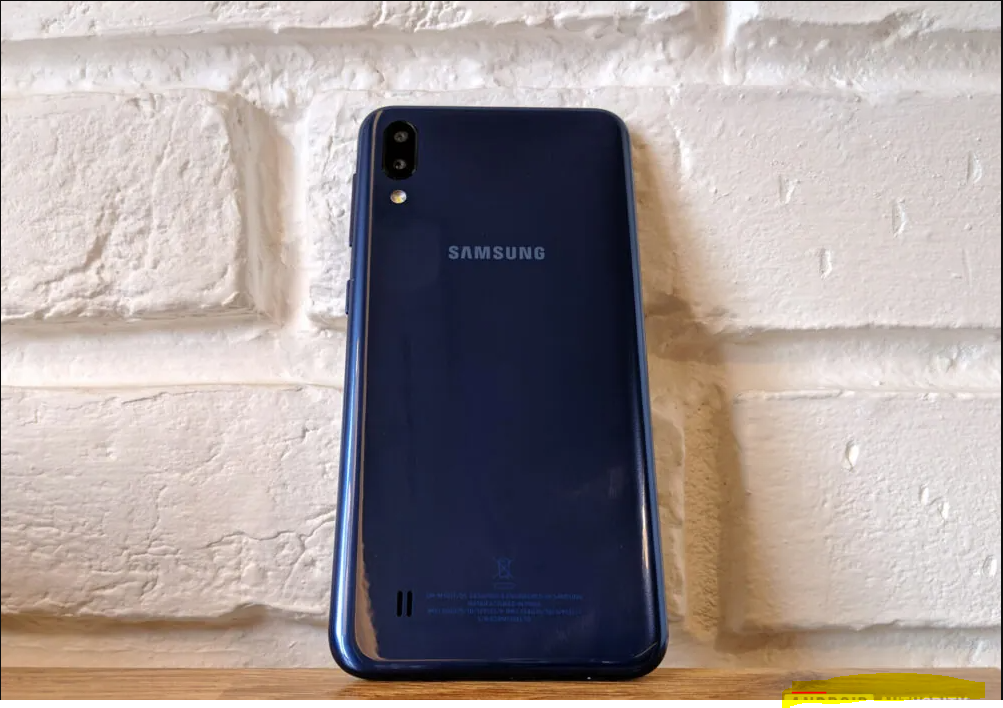
The Galaxy M10 follows the familiar design language seen across Samsung’s mid-range lineup. Its all-plastic construction may not be particularly premium, but it appears to prioritize durability and practicality over flashy aesthetics. The phone feels sturdy in the hand and gives the impression that it can handle everyday knocks and bumps without showing too much wear.
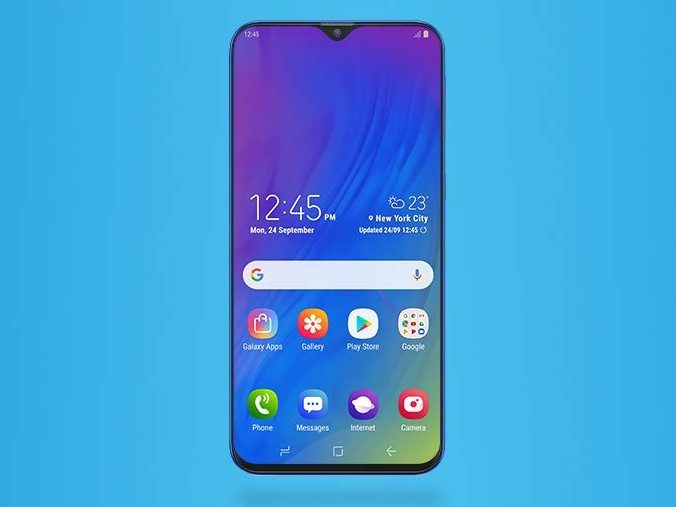
That doesn’t mean Samsung has left the design completely unchanged. Compared with the company’s older On and J series, the Galaxy M10 has a noticeably more modern look. Its front features a waterdrop-style notch paired with relatively slim bezels, giving the display a cleaner appearance. The phone is also comfortable to hold, while its overall design adds a touch of premium appeal despite the plastic construction.
Galaxy M10 seems to be going for overall robustness than a flashy design. The phone feels like it could take a beating and come out looking just fine.
When it comes to ergonomics, the Galaxy M10 keeps things practical. The volume rocker and power button are positioned on the right side, making them easy to access during everyday use. Both buttons offer a solid, responsive click and remain firmly in place without the unwanted rattle often found on budget smartphones.
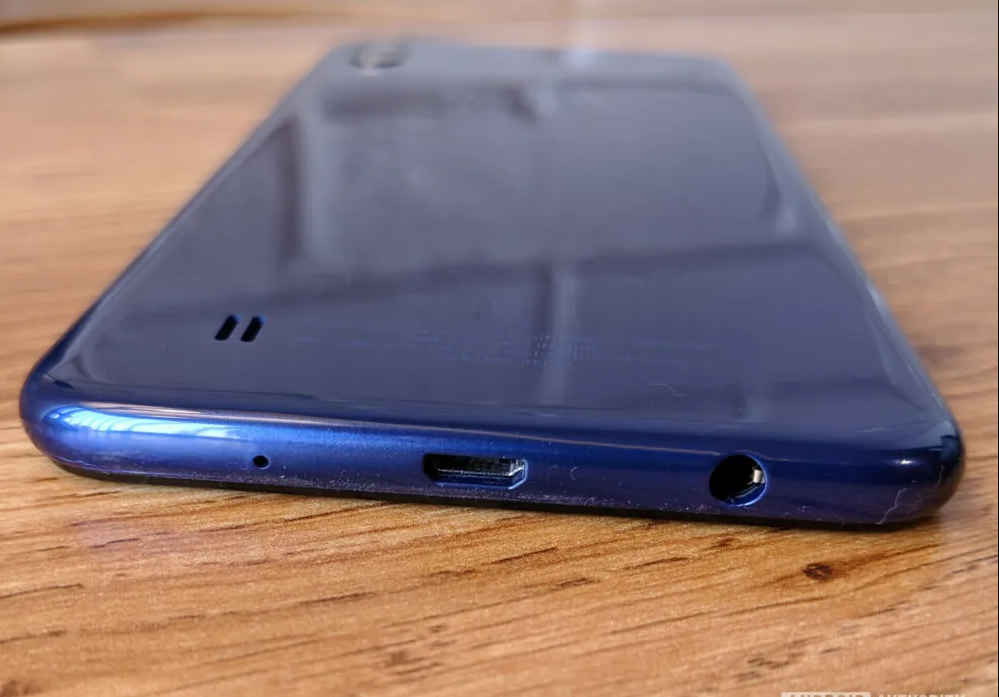
Along the bottom edge of the Galaxy M10 sits a Micro-USB port for charging. While using a familiar connector makes sense for a budget device, a USB-C port would have made the phone feel more modern and given it a stronger edge over some competitors.
A 3.5mm headphone jack is positioned alongside the charging port. The speaker grille, however, is located on the rear of the phone, which can easily muffle the sound when the device is placed on a flat surface. Volume output is also fairly limited. Audio quality is acceptable for casual listening, but the overall reproduction is average, with little bass and a slightly thin sound profile.
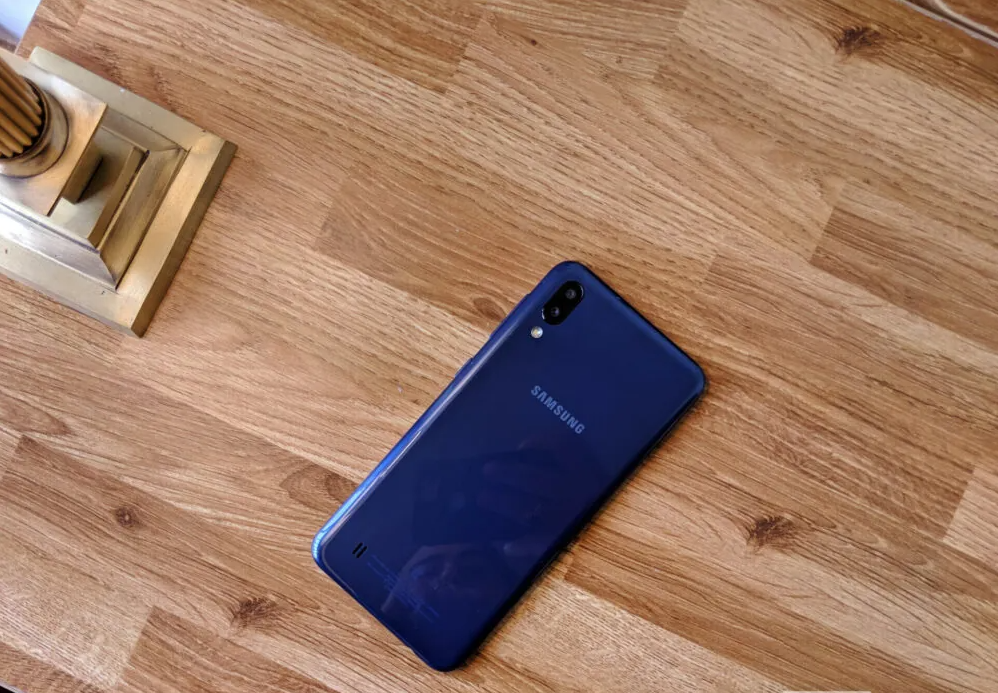
The rear panel is where the Galaxy M10’s design feels less distinctive. Apart from the subtle Samsung branding and dual-camera setup, there is little to make the back stand out. The plastic construction doesn’t offer much of a premium feel, while the simple matte-blue finish looks somewhat understated compared with the metal bodies and gradient designs commonly found on competing smartphones.
Galaxy M10 Review: Display
The Galaxy M10 features a 6.23-inch LCD panel with an HD+ resolution of 720 × 1520 pixels. While the display delivers decent visuals for everyday use, it isn’t particularly sharp by modern standards. Images, videos, and text can appear slightly soft, especially when viewed up close.
On the brighter side, the screen produces vibrant colors and offers an overall pleasant viewing experience. There is a minor amount of color shifting when the display is viewed from extreme angles, but it’s unlikely to be an issue during normal use. However, Samsung doesn’t provide detailed controls for adjusting the display’s color temperature or saturation, limiting customization options for users who prefer a more personalized look.
The Galaxy M10’s display is easy enough to view indoors, but outdoor visibility can be a challenge. Turning off automatic brightness and manually increasing the brightness to its maximum level helps improve readability under direct sunlight. Even then, the highly reflective screen can make viewing content outdoors less than ideal.
I also found the default font size unnecessarily large, which limits how much text can fit on the screen in Samsung’s system apps. Thankfully, the font size and style can be adjusted directly through the Settings menu. As with many Samsung devices, there are several font options available, although the selection may not appeal to everyone.
While it’s vibrant, the screen is definitely not the sharpest around and everything from images, videos to text looks just a bit too soft.
The most noticeable change to the display is the teardrop-style notch at the top. Samsung refers to this as an Infinity-V display, named after the V-shaped cutout that houses the front-facing camera. There’s no dedicated software option to hide the notch, but it quickly becomes easy to ignore. Throughout the review period, it never proved to be a significant distraction during everyday use.
Galaxy M10 Review: Hardware
The Galaxy M10 shares much of its internal hardware with the older Galaxy J7, making it clear that raw performance isn’t its primary focus. The phone is powered by Samsung’s Exynos 7870 Octa chipset, which was already showing its age when the M10 launched.
The Exynos 7870 features eight Cortex-A53 CPU cores clocked at 1.6GHz. Its performance falls behind competing chipsets such as the Snapdragon 625 found in phones like Xiaomi’s Redmi 6 Pro. First introduced in 2016, the processor is relatively dated and struggles to match the capabilities of newer budget-focused platforms.
The variant tested comes with 3GB of RAM and 32GB of internal storage. Samsung also offers a more affordable configuration with 2GB of RAM and 16GB of storage. On the 32GB model, around 22GB was available to the user out of the box, while expandable storage provides additional room for apps, photos, and other content.
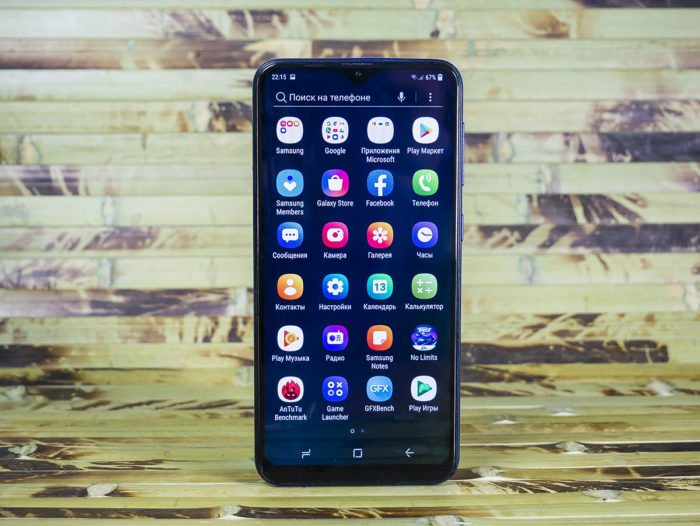
One of the Galaxy M10’s more practical features is its dedicated dual-SIM setup, which is accompanied by a separate microSD card slot. This is a welcome choice for budget-conscious users, especially as many competing phones rely on hybrid slots that force users to choose between a second SIM and expandable storage. The M10 also supports VoLTE on both SIM slots, adding further convenience for users who rely on dual-SIM connectivity.
Galaxy M10 Review: Performance
The Galaxy M10 delivers adequate performance for everyday tasks, which is fairly expected given its older hardware. Samsung has done a respectable job optimizing the software, allowing routine activities such as browsing, messaging, and switching between apps to remain reasonably smooth.
It isn’t the most fluid experience, however. Occasional stutters and frame drops are noticeable, particularly during heavier tasks, but they aren’t frequent or severe enough to significantly affect general usability. For basic day-to-day use, the Galaxy M10 gets the job done without major issues.
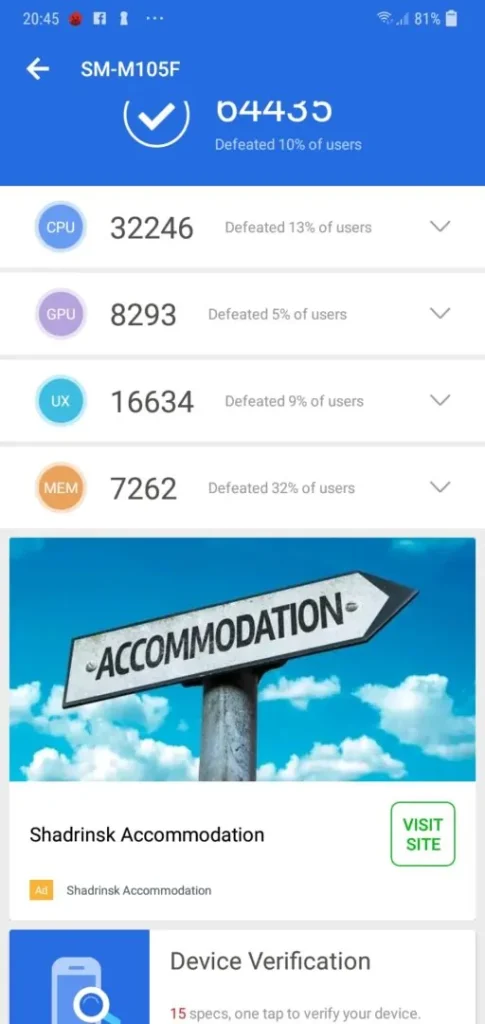
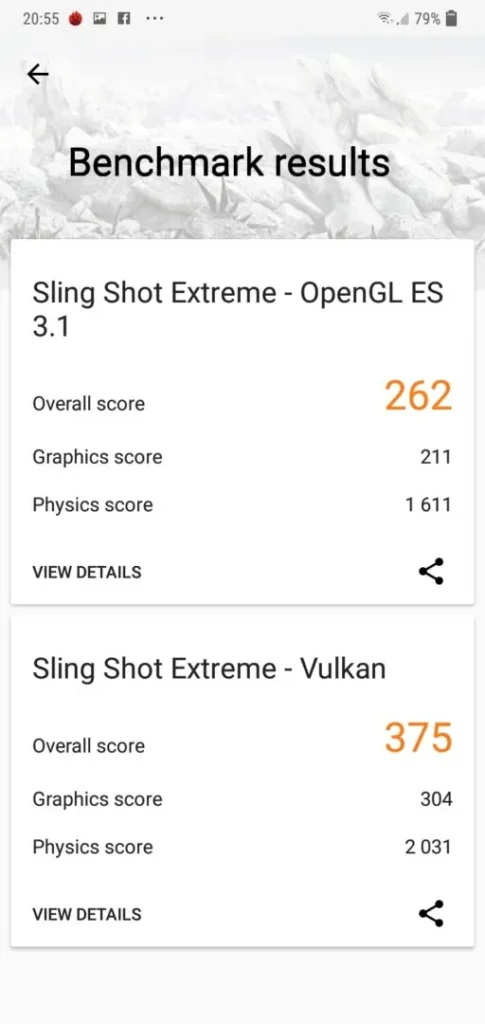
With only 3GB of RAM, we didn’t expect particularly strong memory management from the Galaxy M10, but the phone performed better than anticipated. Switching between demanding apps such as PUBG, the browser, and the camera can feel sluggish, yet multitasking remains reasonably manageable.
More importantly, the phone was able to keep the game running in the background while we switched over to take photos and answer a call. Although app switching isn’t always seamless, the Galaxy M10 handles everyday multitasking fairly well for its hardware.
We had low expectations from the memory management, but the phone does decently well here.
The Mali 830 GPU is where the Galaxy M10’s aging hardware really starts to show its limitations. Gaming performance is quite weak, so users looking for a device that can handle demanding games may be disappointed. Even with PUBG set to the lowest graphics settings, the game struggled to maintain a consistent frame rate. Visual quality was also noticeably compromised, with blocky textures, limited draw distances, and frequent texture pop-ins making the overall gaming experience less enjoyable.

Let’s talk about the Galaxy M10’s network performance. Even in an area with very weak network coverage, the phone managed to pick up and maintain a signal reasonably well, although Honor’s budget offerings performed slightly better. Once connected to Airtel’s network, call quality was impressive, with conversations coming through loud and clear. We experienced no notable issues during calls.
Galaxy M10 review: Software
Would it surprise you if I said I like what Samsung has done with the Galaxy M10’s software? While it doesn’t run Android 9 Pie, Samsung Experience 9.5 paired with Android 8.1.0 delivers a cohesive and well-optimized experience. The interface feels familiar to long-time Samsung users while still providing enough customization options for users who want more flexibility.
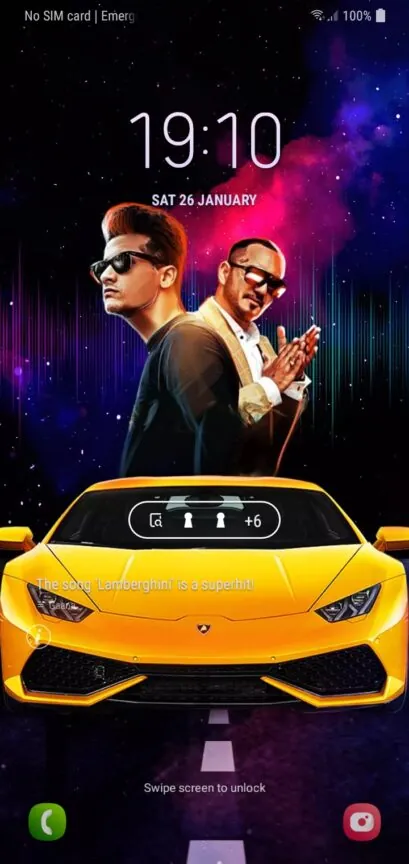
The lock screen opens with a magazine-style layout that displays the latest news based on your selected interests. Called Lock Screen Stories, the feature can be disabled from the Settings menu if you prefer a cleaner experience. Samsung also lets you customize the home screen layout, with the option to choose between an iOS-style, app-focused setup and the more traditional layout with a dedicated app drawer.
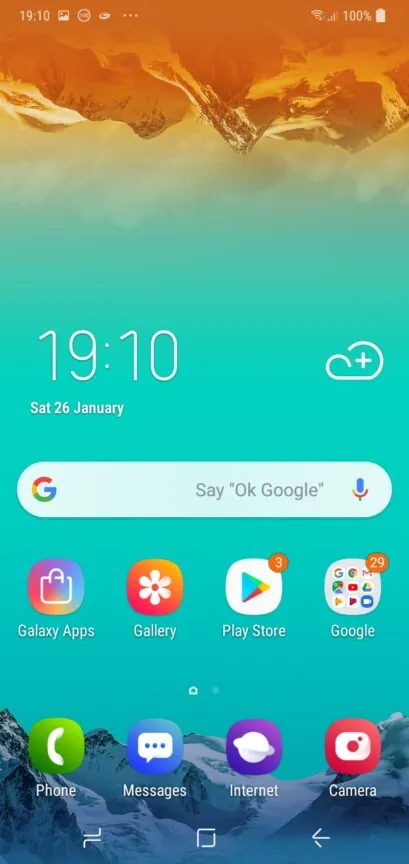
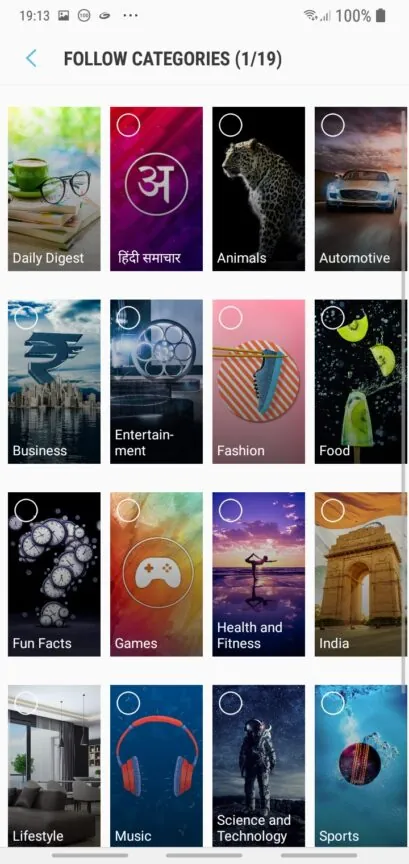
The phone ships with a few pre-installed apps including Office, OneDrive and LinkedIn, and none of these can be uninstalled. The Dailyhunt news app, on the other hand, can.

Samsung has done an excellent job implementing gestures on the Galaxy M10, making navigation through the interface feel quick and intuitive. Users can also customize the button layout, while a translucent navigation bar at the bottom provides helpful guidance for those new to gesture-based controls. On a display as large as the M10’s, these navigation gestures make everyday use noticeably more comfortable and enjoyable.
I like what Samsung has done with the Galaxy M10’s software
Finally, the Galaxy M10 doesn’t have a fingerprint scanner, leaving facial recognition as the only biometric option for unlocking the phone. Unfortunately, the feature is too slow to be genuinely useful in everyday situations and works best under good lighting conditions. I did appreciate Samsung’s small touch of adding an animation around the notch while facial recognition is being used. It’s a minor detail, but it adds a bit of polish to the overall experience.
Galaxy M10 review: Camera
Like most smartphones in this price range, the Galaxy M10 comes with a dual-camera setup on the rear. However, Samsung takes a more useful approach by pairing the 13MP primary sensor with a 5MP ultrawide camera instead of using a basic depth sensor. This gives the phone greater flexibility when taking photos and makes the camera setup look quite promising on paper.
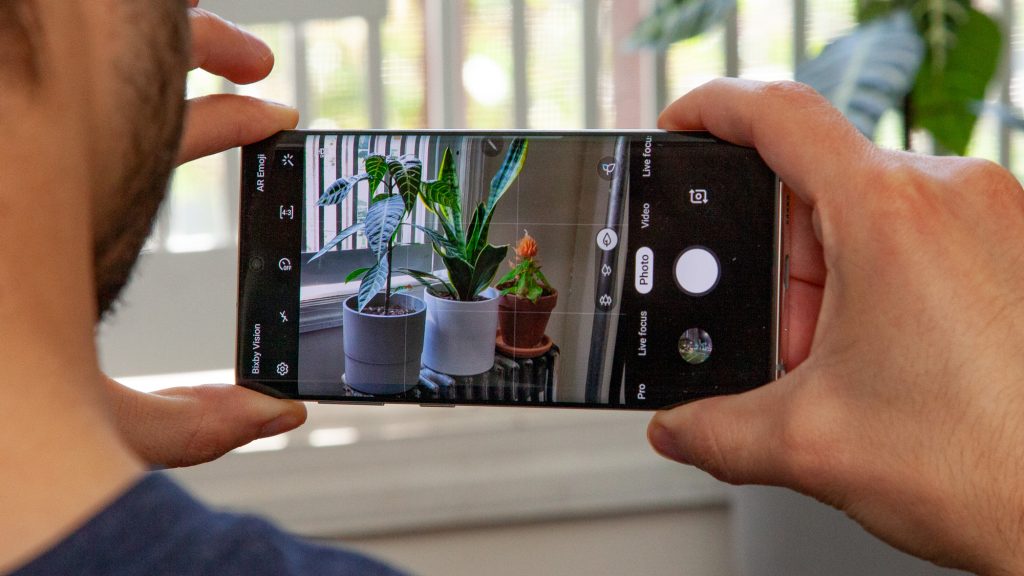
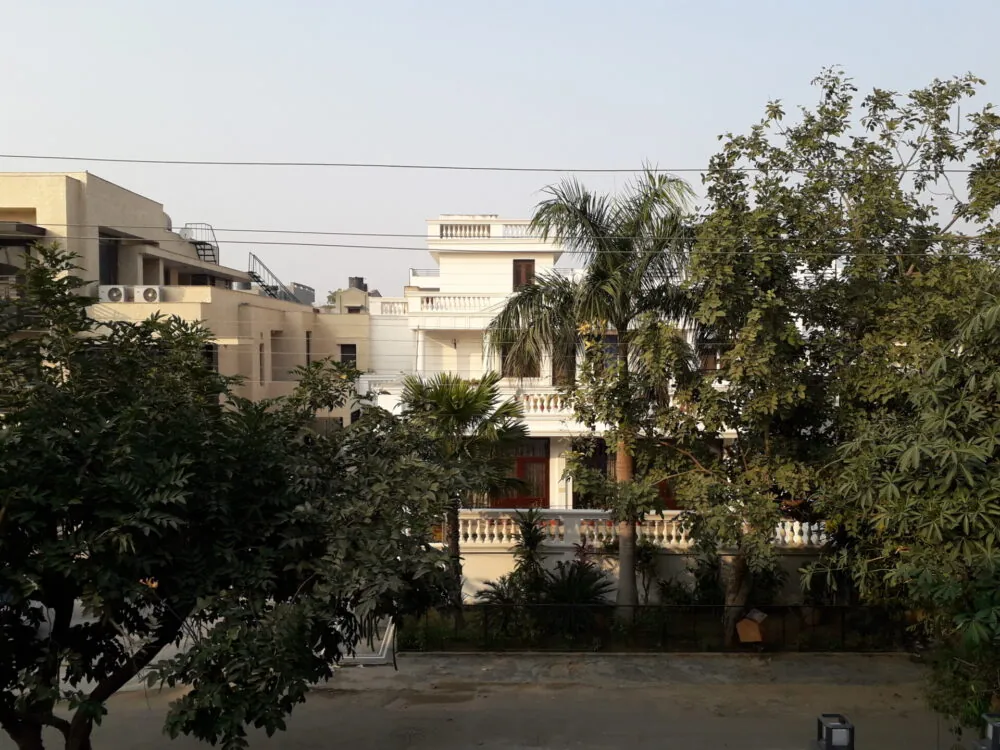
Outdoors, the Galaxy M10’s camera produces reasonably usable shots, but the results are far from impressive. Dynamic range is quite limited, with details frequently disappearing in darker areas of the frame. Highlights also tend to get overexposed, leading to washed-out images, particularly in scenes with strong sunlight.

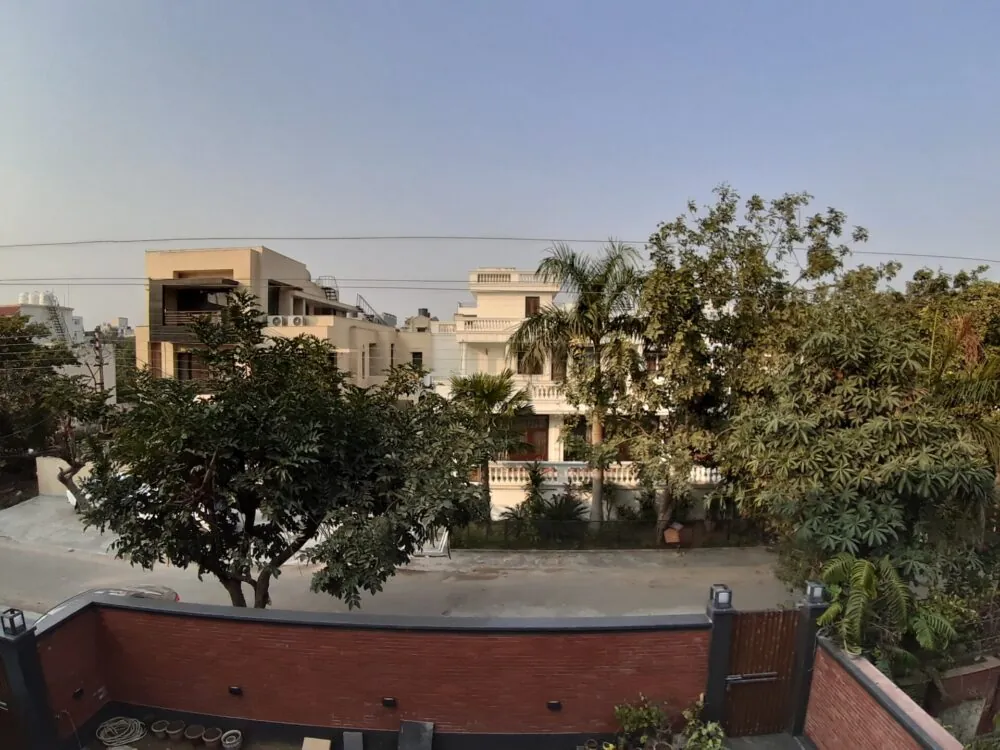
The Galaxy M10’s standout camera feature is its 5MP secondary ultrawide sensor. Similar to the wide-angle cameras found on some LG phones, it offers a 120-degree field of view, allowing you to fit significantly more into a single frame. This can be particularly useful for capturing large groups, buildings, monuments, or expansive landscapes.
There is noticeable distortion around the edges of images, which is fairly common with ultrawide lenses. Image quality is also limited, with photos lacking fine detail and becoming noticeably noisy in challenging lighting conditions. Even so, the added versatility is difficult to overlook. An average ultrawide camera is far more useful in everyday photography than a low-value monochrome sensor.
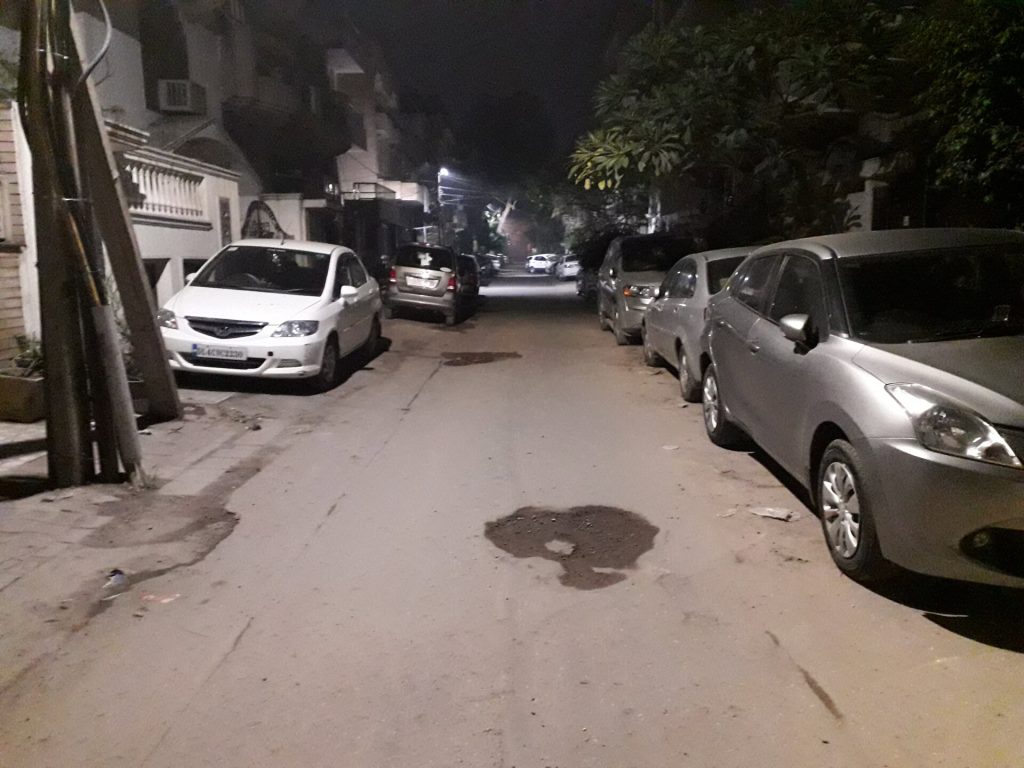
Low light photos from the Galaxy M10 are high on noise and low on details.
Low-light photography is one of the Galaxy M10’s weaker areas. Images tend to contain noticeable noise and lack fine detail, with the quality dropping even further when using the ultrawide camera. There’s also no dedicated night mode to help improve results in darker scenes. While the Pro mode gives you some manual control over the camera settings, it does little to significantly improve image quality, so expectations should remain modest when shooting in challenging lighting conditions.
The Galaxy M10’s front camera comes with a smart beauty filter enabled by default, which noticeably smooths the skin and brightens the overall appearance. While this may appeal to users who prefer ready-to-share selfies, the effect can feel overly aggressive. Thankfully, it can be disabled with a quick tap.
With the beauty filter turned off, the 5MP front-facing camera still struggles to capture fine details. Selfies look reasonably good under ideal lighting, but image quality drops quickly in dimmer conditions, where photos can appear slightly soft and blurry.
Camera samples gallery
Samsung Galaxy M10


Galaxy M10 review: Battery
The Samsung Galaxy M10 packs a 3,400mAh battery, which is fairly typical for a smartphone in this segment. However, Samsung has managed to make excellent use of the available capacity, delivering impressive endurance without relying on overly aggressive battery-saving measures. For most users, the phone can comfortably get through a full day of regular use, with enough power left for more.
In our video playback test, with screen brightness set to around 50 percent, the Galaxy M10 managed more than 18 hours of continuous playback. With a typical mix of gaming, social media, and web browsing, the phone consistently delivered more than 6 hours of screen-on time during testing. Even a 30-minute PUBG session consumed only around 5 percent of the battery. Overall, the Galaxy M10 is a remarkably efficient phone when it comes to battery consumption.
There is no fast charging support on the Galaxy M10 and a full charge using the included charger took about 2 hours and 15 minutes.
If all you want is a well-built, modern-looking phone that does the basics, the Galaxy M10 is a surprisingly solid option.
Should you buy the Galaxy M10?
The Galaxy M series marks Samsung’s renewed effort to appeal to a younger generation of smartphone users. However, this audience tends to place just as much importance on hardware and features as it does on the overall user experience. In that regard, the Galaxy M10 has a few notable shortcomings, including modest performance, the absence of a fingerprint scanner, and average camera quality.
The Samsung Galaxy M10 starts at Rs. 7,990 for the 2GB RAM variant, while the 3GB RAM model with twice the storage costs Rs. 8,990. If your priorities are a sturdy build, modern design, reliable battery life, and a smooth enough experience for everyday tasks, the Galaxy M10 makes a surprisingly good case for itself. Samsung Experience is functional, responsive, and offers plenty of customization options.
However, users looking for stronger performance and more capable cameras may find better alternatives from Xiaomi and Realme. The Redmi 6A and Realme C1, in particular, offer compelling competition in the same price range.
Galaxy M10 FAQs
Is the Samsung Galaxy M10 good for everyday use?
Yes. The Galaxy M10 handles basic tasks such as calling, messaging, browsing, social media, and video streaming reasonably well. Its battery life is also a major strength.
Does the Galaxy M10 have a fingerprint scanner?
No. The Galaxy M10 does not include a fingerprint scanner. Instead, it offers facial recognition for biometric unlocking.
Is the Galaxy M10 good for gaming?
The Galaxy M10 is suitable for light gaming, but it struggles with demanding titles. Games such as PUBG can experience frame-rate drops, poor textures, and limited visual quality.
How good is the Galaxy M10 camera?
The Galaxy M10 has a 13MP primary camera and a 5MP ultrawide camera. Daylight photos are usable, but limited dynamic range and weak low-light performance prevent it from being a standout camera phone.
How is the battery life on the Galaxy M10?
Battery life is one of the phone’s strongest features. Its 3,400mAh battery can comfortably last a full day, while moderate users can expect more than a day of use depending on their usage patterns.
Conclusion
The Samsung Galaxy M10 is a budget smartphone that gets many of the basics right. Its modern design, vibrant display, dependable battery life, dual-SIM support, and ultrawide camera give it plenty of practical appeal. Samsung’s software is also well optimized and offers enough customization to make everyday use enjoyable.
However, the aging processor, limited gaming performance, average cameras, and lack of a fingerprint scanner hold it back from being a complete package. The Galaxy M10 is best suited to users who prioritize a reliable, good-looking phone for everyday tasks rather than demanding performance. For those seeking more power at a similar price, competing options from Xiaomi and Realme may be worth considering.
